
Category: Blog

  • Shamanism -Bridging Earth and Sky & Soul Recovery

    Shamanism -Bridging Earth and Sky & Soul Recovery

    Shamanism, as a spiritual practice, seeks to bridge the realms of Earth and Sky by connecting the physical world (Earth) with the spiritual world (Sky) through rituals, ceremonies, and healing practices. Central to this is the shaman, a healer, and guide, who acts as an intermediary between these realms to restore balance, heal the soul, and bring wisdom from the spiritual plane to the earthly plane. Two key concepts within this tradition are the idea of Bridging Earth and Sky and Soul Recovery.

    Bridging Earth and Sky in Shamanism:

    Shamans believe in the interconnectedness of all life forms, nature, spirits, and cosmic forces. The phrase “Bridging Earth and Sky” refers to the shaman’s role as a link between the physical and spiritual worlds. Through the use of altered states of consciousness (often achieved by drumming, chanting, or using entheogenic plants), shamans journey into non-ordinary reality to seek guidance from spirit helpers, ancestors, or animal totems. This journey is seen as traveling vertically between three realms:

    1. The Lower World (Earth): Connected to nature, ancestors, and animal spirits, this world contains wisdom about physical survival, grounding, and primal energies.
    2. The Middle World: This is the world we inhabit but also includes its energetic and spiritual layers. Shamans use this world to work with plants, land spirits, or perform healing for individuals in real-time.
    3. The Upper World (Sky): Often associated with celestial beings, higher consciousness, and the divine, it is the realm where guidance, inspiration, and spiritual wisdom reside.

    Through this bridging process, the shaman brings healing, messages, and knowledge to their community or the individual they are working with. They help maintain harmony between the physical and spiritual realms, ensuring that human life stays in balance with nature and the cosmos.

    Soul Recovery in Shamanism:

    Soul loss is a core concept in shamanism. It is believed that traumatic events, emotional distress, or prolonged suffering can cause parts of the soul to fragment or become disconnected from the person. These missing parts of the soul leave the individual feeling incomplete, leading to issues such as depression, illness, a sense of disconnection, or recurring patterns of misfortune.

    Soul recovery (or soul retrieval) is a healing technique where the shaman, through a spiritual journey, seeks to recover and reintegrate these lost fragments of the soul. The process typically follows several steps:

    1. Journeying to Find the Lost Soul Fragment: The shaman enters a trance state and journeys to the realm where the lost part of the soul resides. This can be the Lower World, the Upper World, or other spiritual realms, depending on the situation.
    2. Negotiating the Return: Sometimes the soul fragment is held in a specific place, trapped by past trauma, entities, or emotional baggage. The shaman may need to heal or negotiate the release of the soul piece.
    3. Reintegration: Once the fragment is retrieved, the shaman returns it to the person, often blowing it back into their body through breath or through the heart and crown chakras.
    4. Healing and Aftercare: After a soul retrieval, individuals may need time to process and reintegrate the aspects of themselves that were lost. This often involves making lifestyle changes, letting go of unhealthy relationships, or embracing new perspectives.

    The Healing Power of Shamanic Practices:

    Shamanism emphasizes balance—both within the individual and between the person and the greater cosmos. The practices of Bridging Earth and Sky and Soul Recovery are methods of aligning the individual with their deeper soul purpose and ensuring harmony between their physical existence and spiritual essence. Healing through shamanism is holistic, addressing not just the body and mind but the soul, making it deeply transformative for those who participate in it.

    In this way, shamanism offers both a profound connection to the natural and spiritual worlds and practical techniques for healing trauma, finding guidance, and experiencing a deeper sense of unity with all life.

  • Crystals, Orgones and Radionic devices against HAARP Antennas and Psychotronic devices

    Crystals, Orgones and Radionic devices against HAARP Antennas and Psychotronic devices

    The use of crystals, orgonite, and radionic devices to counteract the alleged negative effects of HAARP antennas and psychotronic devices is rooted in a combination of alternative science, metaphysical beliefs, and conspiracy theories. While there is no scientifically verified evidence supporting these claims, some people believe that crystals, orgonite, and radionics can neutralize harmful frequencies or energies generated by devices like HAARP or psychotronic equipment.

    1. HAARP and Psychotronic Devices: The Concerns

    Before delving into the countermeasures, it’s important to understand what HAARP and psychotronic devices are perceived to do in these contexts.

    • HAARP (High-Frequency Active Auroral Research Program) is a research project that focuses on ionospheric manipulation using radio waves. Though HAARP was initially developed for scientific purposes (mainly research into communications and atmospheric phenomena), some believe that HAARP’s radio waves can be used to control weather, influence emotions, or even engage in mind control. However, these ideas are often dismissed by mainstream science as conspiracy theories.
    • Psychotronic devices are believed to use electromagnetic fields, directed energy, or frequencies to influence human thought, emotions, or physical well-being. This belief is rooted in the idea that human consciousness and electromagnetic fields are interconnected, and that certain technologies could exploit these connections for nefarious purposes like mind control, behavior manipulation, or psychological warfare.

    2. Crystals as Countermeasures

    Crystals are thought to emit energies or frequencies that can harmonize, protect, or heal. In metaphysical and alternative healing traditions, each crystal has its own unique properties. Some are believed to provide protection from negative energies or EMF (electromagnetic frequencies), which many claim are emitted by HAARP or psychotronic devices.

    • Black Tourmaline: One of the most popular crystals used for protection against harmful EMFs and negative energy. It is believed to absorb negative energy and neutralize electromagnetic radiation.
    • Shungite: Known for its powerful protective and healing properties, shungite is also reputed to neutralize electromagnetic frequencies. It is often placed near electronic devices to mitigate the effects of EMFs.
    • Amethyst: Traditionally used for calming and protection, amethyst is thought to offer psychic shielding from negative energies or psychic attacks.
    • Selenite: Known for its high vibrational frequency, selenite is often used for clearing negative energy and promoting protection.

    While there is no empirical evidence to support these claims, proponents of crystal healing maintain that these stones help balance the body’s energy field and create a protective barrier against external harmful frequencies.

    3. Orgonite and Orgonics

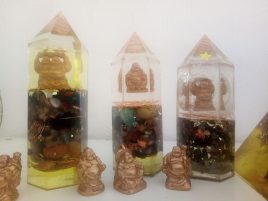
    Orgonite is a substance made from resin, metal shavings, and crystals, designed to transmute negative energy into positive energy. The concept comes from the work of Wilhelm Reich, who coined the term “orgone energy” in the early 20th century. Reich believed that orgone was a type of life force energy present in all living things, and he created devices called orgone accumulators to harness and channel this energy.

    • How Orgonite is Believed to Work: Orgonite enthusiasts claim that this material transforms negative energy (like harmful EMFs or psychotronic frequencies) into positive energy. By placing orgonite near HAARP towers, psychotronic devices, or other sources of harmful frequencies, some believe that it can neutralize their effects.
    • Cloudbusters: Inspired by Reich’s cloudbuster device, modern orgonite practitioners have built orgonite cloudbusters to allegedly counteract harmful geoengineering, chemtrails, and weather manipulation said to be caused by HAARP.

    Orgonite is typically placed in homes, near computers, or worn as jewelry, in the belief that it offers protection from negative energies and electromagnetic fields. Though this practice is popular in certain metaphysical circles, the scientific community does not recognize orgonite or orgone energy.

    4. Radionics and Radionic Devices

    Radionics is a form of alternative medicine and metaphysical practice that involves using specific devices to interact with subtle energy fields. Practitioners of radionics believe that they can use these devices to influence a person’s health, consciousness, or environment through the tuning of frequencies or energies.

    • How Radionic Devices Work: Radionics devices are based on the idea that all living things emit subtle electromagnetic fields or vibrations, and these can be influenced or adjusted by the use of certain tools or machines. A radionic machine typically has dials, tuning mechanisms, and often uses crystals or sacred geometrical shapes to harness and direct energy.
    • Against HAARP and Psychotronic Devices: Some proponents believe radionic devices can be used to neutralize the harmful frequencies from HAARP and psychotronic devices by either sending out opposing frequencies or “shielding” an individual or space. The radionic device is “tuned” to specific frequencies that are believed to resonate with healing or protective energies, thereby disrupting or canceling out the harmful effects.

    Though radionics has historical roots going back to the early 20th century, there is no scientific consensus on whether these devices have any real measurable effect. Radionics remains in the realm of metaphysical and pseudoscientific practices.

    5. Combining Crystals, Orgonite, and Radionics for Protection

    In certain spiritual and metaphysical communities, the combination of crystals, orgonite, and radionic devices is seen as a comprehensive defense system against harmful energy, EMFs, and psychotronic attacks:

    • Crystals are placed in the environment to absorb and neutralize negative energy.
    • Orgonite devices are used to transform harmful EMFs or psychotronic energy into beneficial energy.
    • Radionic devices are employed to “tune” the surrounding energies to more protective frequencies.

    This triad of metaphysical tools is believed by some to provide strong protection against HAARP-generated energies or psychotronic devices, forming a personal or environmental energy field that resists external manipulation.

    6. Scientific Perspective

    It’s important to note that from a scientific viewpoint, there is no evidence to support the efficacy of crystals, orgonite, or radionics in protecting against HAARP or psychotronic devices. The effects of HAARP have been extensively studied and are considered by mainstream scientists to be limited to atmospheric research with no proven capability to control weather or minds.

    Psychotronic devices also remain speculative and are largely discussed in the context of conspiracy theories rather than verified technology.

    The use of crystals and orgonite for EMF protection or energy healing is similarly not supported by scientific research, and is instead classified under alternative medicine or metaphysical practices.

    The belief that crystals, orgonite, and radionic devices can counteract the harmful effects of HAARP antennas or psychotronic devices stems from metaphysical traditions, alternative science, and certain conspiracy theories. While there is no scientific backing for these claims, many people feel that these tools offer protection, healing, and energy balancing in the face of perceived electromagnetic or psychotronic dangers.

    If you are considering using these methods, it’s important to understand that they fall under alternative practices, which often involve personal belief systems rather than empirical validation.

  • Autumn Equinox and Rituals

    Autumn Equinox and Rituals

    The autumnal equinox, which occurs around September 22-23 in the Northern Hemisphere and around March 20-21 in the Southern Hemisphere, is a significant event both astronomically and culturally. It marks the moment when day and night are approximately equal in length, symbolizing a time of balance and transition. This equinox signals the end of summer and the beginning of autumn, and has been celebrated by various cultures throughout history with rituals and festivals that honor the harvest, balance, and preparation for the darker half of the year.

    Astronomical Significance

    The autumnal equinox occurs when the Earth’s equator passes directly through the center of the sun. This means that the sun rises directly in the east and sets directly in the west, and both day and night are nearly equal in duration. After the equinox, the nights grow longer than the days as the Earth tilts further away from the sun, leading toward winter in the Northern Hemisphere.

    Cultural and Spiritual Significance

    For many cultures, the autumnal equinox is a time to celebrate the harvest, give thanks for the abundance of nature, and prepare for the colder months ahead. It is a moment of reflection on the cyclical nature of life, the balance between light and dark, and the need for inner preparation as external conditions become more challenging.

    Rituals and Traditions Associated with the Autumnal Equinox

    1. Harvest Festivals

    • Many cultures celebrate the autumnal equinox with harvest festivals, giving thanks for the bounty of the Earth. These festivals often include communal feasts, where seasonal foods like grains, fruits, and vegetables are shared.
    • Mabon: In modern pagan traditions, especially those inspired by Wicca and neo-paganism, the equinox is celebrated as Mabon, the second harvest festival in the Wheel of the Year. Mabon is a time to give thanks for the harvest and to reflect on the balance between light and dark, as the days grow shorter. Rituals may include decorating altars with autumn leaves, acorns, and symbols of the harvest, such as apples, grapes, and wheat.
    • Thanksgiving: Though not directly aligned with the equinox, many cultures, including in the United States and Canada, have adopted harvest-themed celebrations like Thanksgiving, which also express gratitude for the Earth’s abundance.

    2. Balancing Rituals

    • Since the equinox is a time when day and night are in balance, many rituals focus on the concept of balance in life, both externally and internally.
    • Meditation and Reflection: Some people use this time for meditative practices, focusing on inner balance, letting go of excess, and preparing for the introspective nature of the winter months. The equinox is seen as an opportunity to assess areas of life that are out of balance and make adjustments.
    • Rituals of Release: In preparation for the coming darker season, people often engage in rituals of letting go. This might involve writing down worries or negative thoughts on paper and then burning them to symbolize releasing burdens and starting anew.

    3. Bonfires and Fire Ceremonies

    • Fire, a symbol of transformation and illumination, is often used in equinox rituals to honor the sun’s waning power and bring warmth and light as the nights grow longer.
    • Bonfires have been a traditional part of equinox celebrations, especially in agricultural societies. They serve as a communal gathering point and a way to give thanks for the sun’s light, even as its strength diminishes. Participants may offer sacrifices of harvested goods or symbolic objects into the fire as an act of gratitude.

    4. Honoring the Deities of the Harvest

    • In ancient cultures, the autumnal equinox was often associated with gods and goddesses connected to the harvest, fertility, and the cycle of life and death.
    • Demeter and Persephone: In Greek mythology, the equinox marks the beginning of Persephone’s descent into the underworld, where she will spend the winter months. Her mother, Demeter, the goddess of the harvest, mourns her absence, which causes the Earth to become barren until Persephone’s return in the spring.
    • Celtic Deities: In Celtic traditions, this time of year is connected with the Green Man or Cernunnos, who represent the dying aspect of nature as it prepares for rebirth. Rituals may involve honoring these deities with offerings of grains, fruits, and other symbols of the harvest.

    5. Creating an Autumn Altar

    • Many spiritual practitioners, especially within pagan and Wiccan traditions, create seasonal altars to honor the equinox. These altars may be decorated with symbols of autumn, including pumpkins, cornucopias, fallen leaves, acorns, gourds, and autumnal flowers.
    • Personal items or objects representing balance, such as scales or two equal candles (one representing light, one representing darkness), may also be placed on the altar to symbolize the equinox’s theme of equilibrium.

    6. Gratitude Practices

    • The equinox is a powerful time for gratitude rituals, expressing thanks for the harvest, both literal and metaphorical. People may write down what they are thankful for over the past year and offer these thoughts to the Earth, a fire, or a river as a symbolic gesture of appreciation.

    7. Nature Walks and Grounding Rituals

    • Connecting with nature during the equinox is a common practice. Many people take nature walks to observe the changing colors of the leaves, the crispness in the air, and the shifting light. These walks are often used as a time to reflect on the cycle of the seasons and one’s place within it.
    • Some traditions practice grounding rituals, where participants walk barefoot on the Earth to reconnect with nature’s energy and give thanks for the harvest season.

    8. Feasting and Sharing Seasonal Foods

    • Sharing a seasonal feast is central to many autumnal equinox celebrations. Foods typically associated with autumn, such as apples, pumpkins, squash, corn, and grains, are used in preparing meals that are shared with family, friends, and the community.
    • These feasts are not only a celebration of the harvest but also an opportunity to share the fruits of labor and express gratitude for the abundance of the Earth.

    9. Ancestor Honoring and Reflection on the Cycle of Life

    • The autumn equinox also serves as a time to reflect on the cycle of life and death, as the natural world begins its decline into winter. In some traditions, this is a time to honor the ancestors and the wisdom of those who have come before.
    • Rituals may include lighting candles for deceased loved ones, creating altars with photos or mementos of ancestors, or performing prayers or invocations to honor their memory and guidance.

    The autumnal equinox is a time of deep reflection, gratitude, and balance. It invites us to honor the Earth’s cycles, prepare for the coming winter, and assess the balance in our own lives. Whether through meditation, communal feasting, fire ceremonies, or quiet walks in nature, the rituals associated with the equinox emphasize the importance of harmony between light and dark, inner and outer worlds, and humanity’s relationship with the natural environment. These celebrations provide a meaningful way to connect with the changing seasons and with ancient traditions that honor the cyclical rhythms of life.

  • Meditația, mantrele și mudrele in terapia spirituala

    Meditația, mantrele și mudrele in terapia spirituala

    Meditația, mantrele și mudrele sunt practici străvechi, folosite de mii de ani pentru a promova vindecarea mentală, emoțională și spirituală. Acestea au origini în tradițiile spirituale orientale, în special în hinduism, budism și tradițiile yoghine. În terapia de vindecare, ele pot juca un rol important prin promovarea unui sentiment de echilibru interior și liniște.

    1. Meditația în terapia de vindecare

    Meditația este o practică de concentrare și conștientizare care ajută la reducerea stresului, la îmbunătățirea clarității mentale și la restabilirea echilibrului emoțional. Meditația poate fi de diferite tipuri, iar fiecare poate avea beneficii terapeutice distincte:

    • Meditația mindfulness: Concentrarea atenției asupra momentului prezent fără a judeca. Aceasta este utilă pentru reducerea anxietății, depresiei și a stresului cronic.
    • Meditația concentrată: Implică focusarea pe un singur obiect, sunet, respirație sau concept. Ajută la dezvoltarea clarității mentale și la eliminarea distragerilor.
    • Meditația de vizualizare: În această practică, indivizii își imaginează în mod activ scenarii de vindecare sau de pace interioară. De exemplu, cineva ar putea vizualiza lumina vindecătoare care curge prin corp.
    • Meditația transcedentală: Utilizează mantre pentru a transcende gândurile obișnuite și a atinge o stare de liniște profundă și relaxare.

    Beneficii terapeutice ale meditației:

    • Reducerea stresului și a cortizolului din organism.
    • Îmbunătățirea sănătății mentale, prin reducerea anxietății și depresiei.
    • Promovarea vindecării fizice, deoarece meditația reduce tensiunea arterială, îmbunătățește somnul și sprijină sistemul imunitar.
    • Restabilirea echilibrului emoțional, ajutând indivizii să gestioneze mai bine emoțiile negative.

    2. Mantrele în terapia de vindecare

    Mantrele sunt sunete, cuvinte sau fraze sacre repetate în timpul meditației pentru a ajuta la concentrarea minții și la conectarea cu energia divină sau cosmică. Cuvântul „mantra” provine din sanscrită și poate fi tradus aproximativ ca „instrument pentru minte” (de la „man” – minte și „tra” – instrument). Mantrele sunt folosite pentru a alinia vibrațiile corpului și minții și pentru a promova vindecarea și echilibrul.

    • Om: Una dintre cele mai cunoscute mantre, „Om” este considerată sunetul primordial al universului. Repetarea acestei mantre ajută la calmarea minții și la alinierea la energia cosmică.
    • Om Mani Padme Hum: O mantră budistă foarte cunoscută care este asociată cu compasiunea și iluminarea. Practicanții cred că repetarea acestei mantre aduce claritate spirituală și vindecare emoțională.
    • So Hum: O mantră care înseamnă „Eu sunt asta”, este folosită pentru a cultiva conștientizarea conexiunii între individ și univers.

    Beneficii terapeutice ale mantrelor:

    • Eliminarea stresului mental: Prin repetarea unei mantre, mintea devine concentrată și liniștită, reducând anxietatea și promovând calmul.
    • Creșterea energiei pozitive: Mantrele sunt asociate cu vibrații sonore care influențează câmpul energetic al corpului, promovând sentimente de pace și bunăstare.
    • Îmbunătățirea concentrării și clarității: Repetarea mantrelor poate ajuta la eliberarea gândurilor negative și la încurajarea unei perspective mai clare asupra vieții.

    3. Mudrele în terapia de vindecare

    Mudrele sunt gesturi simbolice ale mâinilor care sunt folosite în practici spirituale și terapeutice pentru a canaliza și direcționa energia pranică (forța vieții). Fiecare mudră influențează diferite părți ale corpului, ale minții și ale spiritului, ajutând la armonizarea energiilor din corp.

    • Gyan Mudra (Mudra cunoașterii): Este realizată prin unirea vârfului degetului mare cu vârful degetului arătător. Ajută la îmbunătățirea concentrării și la reducerea tensiunii mentale. Este asociată cu înțelepciunea și iluminarea.
    • Prana Mudra (Mudra energiei vitale): Această mudră este realizată prin unirea vârfului degetului mare cu vârful degetelor mic și inelar. Este folosită pentru a stimula energia vitală și pentru a îmbunătăți sănătatea generală.
    • Apana Mudra (Mudra detoxificării): Este realizată prin unirea vârfului degetului mare cu vârfurile degetelor mijlociu și inelar. Ajută la eliminarea toxinelor din organism și la purificarea energetică.
    • Shunya Mudra (Mudra vidului): Folosind această mudră, degetul mijlociu este pliat peste baza degetului mare, în timp ce degetul mare apasă ușor pe el. Ajută la eliminarea durerii, în special în urechi și gât.

    Beneficii terapeutice ale mudrelor:

    • Echilibrarea energiilor: Fiecare deget este asociat cu unul dintre cele cinci elemente (pământ, apă, foc, aer și eter), iar mudrele ajută la echilibrarea acestor elemente în corp.
    • Reducerea stresului și anxietății: Practicarea mudrelor poate calma mintea și reduce tensiunea emoțională.
    • Promovarea vindecării fizice: Mudrele sunt utilizate pentru a stimula anumite canale energetice din corp, sprijinind procesele de vindecare fizică.
    • Îmbunătățirea clarității mentale: Mudrele practicate în timpul meditației pot ajuta la creșterea concentrării și a conștientizării de sine.

    Utilizarea acestor practici în vindecare

    În cadrul terapiei de vindecare, meditația, mantrele și mudrele sunt folosite împreună pentru a crea un proces holistic de transformare. Practicile sunt menite să calmeze mintea, să realinieze energia corpului și să ofere o conexiune mai profundă cu sinele interior și cu energiile universale.

    Exemple de combinații pentru vindecare:

    • Meditație + mantra + mudră pentru calmare emoțională: Practica unei meditații mindfulness, repetând mantra „Om Shanti” (care înseamnă „pace”) și folosind Gyan Mudra pentru a ajuta la liniștirea minții și la echilibrarea emoțiilor.
    • Meditație + mantra pentru vindecare fizică: Repetarea mantrei „Om Namah Shivaya” în timpul unei meditații de vizualizare poate sprijini vindecarea fizică și transformarea, în timp ce utilizarea Prana Mudra poate ajuta la stimularea energiei vitale și a proceselor de vindecare.
    • Mudre pentru purificare energetică: Practicarea Apana Mudra poate fi utilizată în timpul unei meditații de curățare energetică pentru a ajuta la detoxifierea emoțională și fizică a corpului.

    Meditația, mantrele și mudrele oferă un cadru holistic pentru vindecare prin conectarea minții, corpului și spiritului. Fiecare dintre aceste practici ajută la echilibrarea energiilor interne, reducerea stresului și stimularea proceselor naturale de vindecare ale corpului. Incorporarea lor în viața de zi cu zi poate aduce o transformare profundă, susținând sănătatea fizică, emoțională și spirituală.

  • Prometheus and the fire

    Prometheus and the fire

    The myth of Prometheus and the fire is one of the most significant stories in Greek mythology, symbolizing defiance against authority, the pursuit of knowledge, and the cost of progress. Prometheus, a Titan, defied the gods, particularly Zeus, by stealing fire from the heavens and giving it to humanity. This myth has been interpreted in various ways throughout history, often highlighting themes of enlightenment, rebellion, and sacrifice.

    The Myth of Prometheus

    Prometheus, whose name means “forethought,” was one of the Titans, an older generation of gods who ruled before the Olympians. However, unlike most Titans who were overthrown by Zeus and his siblings, Prometheus sided with the Olympian gods during their battle, gaining a unique position among them. Despite this, Prometheus had a special concern for humankind and became their protector, seeing their potential for greatness but also their vulnerability.

    The Gift of Fire

    In the myth, after Zeus established his rule, he became wary of the power of humanity. Zeus withheld fire from humans, believing that by keeping them in the dark (both literally and metaphorically), they would remain weak, dependent, and incapable of rivaling the gods.

    Prometheus, however, saw fire as an essential element for human progress. Fire symbolized knowledge, creativity, and technology. It represented the ability to cook food, forge tools, create art, and establish civilization. Without fire, humanity would remain in a primitive state, unable to advance or develop its potential.

    Defying Zeus’s decree, Prometheus stole fire from Mount Olympus and brought it to Earth, gifting it to humans. In some versions of the myth, Prometheus hides the fire in a hollow fennel stalk to smuggle it past the gods.

    The Wrath of Zeus

    Zeus was enraged by Prometheus’s act of defiance. Not only had Prometheus disobeyed him, but he had also empowered humanity in ways that Zeus had not intended. Zeus feared that humans, with fire in their hands, would eventually rival the gods themselves.

    To punish Prometheus, Zeus had him bound to a rock or mountain (in most versions, it is Mount Caucasus) where an eagle (a symbol of Zeus) would come each day to eat his liver. Since Prometheus was immortal, his liver would regenerate overnight, only for the eagle to return the next day and repeat the torment. This cycle of endless suffering was meant to last for eternity.

    The Liberation of Prometheus

    Despite this harsh punishment, Prometheus’s story does not end in perpetual torment. According to some versions of the myth, Heracles (Hercules) eventually comes to free Prometheus as part of his Twelve Labors. Heracles kills the eagle and releases Prometheus from his chains, allowing him to escape his punishment, although in some accounts, Prometheus had to wear a ring as a symbol of his former bondage.

    Symbolism and Interpretations

    The myth of Prometheus has been interpreted in many different ways throughout history, reflecting different cultural and philosophical views on rebellion, knowledge, and the consequences of challenging authority.

    1. The Symbol of Fire:
      • Fire in the myth represents knowledge, enlightenment, and progress. By giving fire to humans, Prometheus empowers them to develop technology, culture, and civilization. In this sense, Prometheus is often seen as a champion of human creativity and intellect.
      • Fire also symbolizes freedom—the ability for humans to shape their own destiny and control their environment, rather than being at the mercy of nature or the gods.
    2. Defiance and Rebellion:
      • Prometheus’s theft of fire is a bold act of defiance against the divine authority of Zeus. In this way, Prometheus represents the archetype of the rebel who stands up to tyranny or oppression in the name of progress or justice.
      • This defiance is also seen as a tragic choice. Prometheus’s rebellion comes with severe consequences—eternal punishment. The story can be viewed as a cautionary tale about the price of challenging authority, especially when it involves powerful forces like the gods.
    3. Suffering and Sacrifice:
      • Prometheus’s punishment highlights the theme of sacrifice for the greater good. He endures unimaginable suffering to ensure that humanity can progress and achieve its potential. His torment can be seen as the price paid for enlightenment and freedom.
      • Prometheus has often been compared to other sacrificial figures in mythology and religion, such as Jesus Christ, who also suffers for the benefit of humanity. Both figures symbolize the idea that progress or salvation often requires great personal sacrifice.
    4. Human Progress and the Danger of Knowledge:
      • The story can also be read as a reflection on the dangers of knowledge. Just as Prometheus’s gift of fire had both positive and negative consequences, the pursuit of knowledge and technology can lead to both incredible advancements and destructive outcomes.
      • In this sense, Prometheus’s myth anticipates modern concerns about the ethical limits of scientific discovery and technological progress.
    5. Prometheus as a Culture Hero:
      • In many interpretations, Prometheus is seen as a culture hero, a figure who brings the tools of civilization to humanity. Fire is just one example—Prometheus was also credited with teaching humans various arts, sciences, and crafts, such as architecture, medicine, and writing.
      • This casts Prometheus in the role of a benefactor, whose actions—despite being condemned by Zeus—are ultimately for the benefit of humanity.

    Prometheus in Modern Interpretations

    The myth of Prometheus has continued to inspire thinkers, writers, and artists throughout the centuries. In modern times, the story of Prometheus has been reinterpreted in various ways, particularly in light of human progress, scientific discovery, and rebellion against authority.

    1. Prometheus as a Symbol of Enlightenment:
      • In the context of the Age of Enlightenment, Prometheus was often seen as a symbol of intellectual progress and human reason. Just as Prometheus gave fire to humanity, Enlightenment thinkers believed that reason, science, and education could liberate people from ignorance and superstition.
    2. Mary Shelley’s Frankenstein (The Modern Prometheus):
      • Mary Shelley’s famous novel, Frankenstein, carries the subtitle “The Modern Prometheus.” In this story, Dr. Frankenstein, like Prometheus, pushes the boundaries of human knowledge by creating life. However, the novel explores the dangers of unchecked scientific ambition, much like Prometheus’s fire brought both empowerment and danger.
    3. Existential and Political Interpretations:
      • In existential philosophy, Prometheus represents the struggle of the individual against the oppressive forces of fate or divine authority. His rebellion is often seen as a metaphor for human freedom, even in the face of suffering or an uncaring universe.
      • Politically, Prometheus has been embraced as a symbol of revolutionary defiance. His challenge to Zeus’s tyranny mirrors the struggles of those who fight against oppressive regimes or systems of power.

    The myth of Prometheus and the fire is a timeless story about the complexities of rebellion, the pursuit of knowledge, and the costs of progress. It raises fundamental questions about the role of defiance in advancing humanity, the dangers of overreaching, and the sacrifices necessary for enlightenment. Prometheus remains one of mythology’s most enduring figures, representing both the hope and the dangers that come with challenging the status quo in the pursuit of something greater.