Category: Blog

  • “Cosmic Engineers”

    “Cosmic Engineers”

    The concept of “cosmic engineers” evokes the idea of advanced or divine beings—perhaps gods, spiritual entities, or even evolved consciousnesses—who play a role in structuring or influencing the universe’s complex design. This can mean shaping energy, life, consciousness, or even overseeing the progress and evolution of different dimensions, worlds, and beings. The term suggests a layer of cosmic intelligence that goes beyond simple cause-and-effect, hinting at an intentional and purpose-driven universe.

    Here’s how this idea is often conceptualized across spiritual, scientific, and metaphysical discussions:

    1. Creators of Structure and Order

    • Celestial Architects: Cosmic engineers are imagined as beings that influence or lay down the foundational principles of cosmic law, such as symmetry, polarity, balance, and harmony, which maintain the structure and stability of the universe.
    • Mediators of Energy and Matter: They might be seen as entities responsible for channeling and organizing energy into matter, perhaps even setting the conditions for life to arise across dimensions.

    2. Guardians of Evolution and Consciousness

    • Spiritual Guides or Overseers: These cosmic engineers are thought to oversee and influence the evolution of consciousness, perhaps by guiding the development of civilizations, seeding knowledge, or helping humanity reach higher levels of understanding and compassion.
    • Catalysts for Spiritual Growth: Some traditions believe cosmic engineers act subtly, sparking evolution in ways that encourage growth, such as through insights, wisdom, or spiritual practices that help souls evolve.

    3. Influencers of Reality and Dimensions

    • Multidimensional Engineers: In metaphysical contexts, cosmic engineers might operate on multiple planes or dimensions, affecting different realms in ways we may only partially perceive or understand.
    • Sacred Geometry and Patterns: Sacred geometry—the idea that the universe is composed of mathematical and geometric patterns—is sometimes attributed to the handiwork of cosmic engineers, implying a harmonious design and interconnectedness underlying existence.

    4. Agents of Transformation and Change

    • Universal Balance: Cosmic engineers are sometimes seen as balancing forces in the universe, stepping in to realign energies or correct imbalances that could disrupt the natural flow of evolution.
    • Initiators of Key Cycles and Events: They might be responsible for cosmic cycles—like those seen in astrology, numerology, and spiritual traditions—signaling shifts in collective energy or the initiation of new eras.

    5. Human Collaboration with Cosmic Engineers

    • Intuitive Alignment: Many spiritual seekers, scientists, and thinkers feel a deep pull to align with these forces, tapping into universal intelligence to harmonize with cosmic design.
    • Guides through Meditation and Vision: Some believe that these engineers can be connected with through deep meditation, dreams, or intuitive practices, allowing individuals to gain insight into their life path and purpose.

    Ultimately, the concept of cosmic engineers helps us envision a universe that is both mysteriously vast and deeply intentional. It speaks to an ancient idea of the cosmos as a living, evolving system, guided by intelligence and interconnected purpose, where humans can choose to connect and align with the greater order for personal and collective evolution.

  • Herbs, Ethereal Herbs & Essence

    Herbs, Ethereal Herbs & Essence

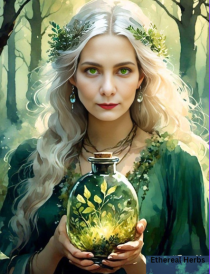
    Herbs have long held a significant place in various cultures for their medicinal, culinary, and spiritual properties. Let’s explore three aspects of herbs: physical herbs, ethereal herbs, and herbal essences, each serving different functions in healing, ritual, and personal well-being.Herbs and their essences have been used for thousands of years for healing, ritual, and spiritual purposes. They range from the tangible, physical herbs like lavender or sage to the more subtle and symbolic “ethereal herbs” used in energetic or vibrational healing. Here’s an overview of the different types of herbal applications:

    1. Physical Herbs

    These are the tangible, dried or fresh herbs that we use in teas, cooking, tinctures, and topical treatments. They contain a range of active compounds that have therapeutic properties, used in both traditional and modern herbal medicine. For instance:

    • Lavender is widely used for relaxation and as a sleep aid.
    • Peppermint is popular for digestive support and has a refreshing effect.
    • Chamomile helps with anxiety relief and promotes restful sleep.

    Each herb has a unique profile of bioactive components like alkaloids, flavonoids, and terpenes, which interact with the body to produce specific effects.

    2. Ethereal Herbs

    Ethereal herbs refer to the energetic or spiritual essence of plants, which are believed to work at a subtle level, influencing emotions, thoughts, and spiritual well-being. These are not used in physical form but are accessed through techniques like meditation, visualization, or energy work, such as in Reiki and shamanic practices.

    In spiritual healing and ritual, practitioners may connect with the spirit or “ethereal presence” of a herb to invite its energy into a session:

    • Sage is traditionally associated with purification and protection.
    • Rosemary is used for memory enhancement and mental clarity.
    • Mugwort is associated with dreamwork and intuition.

    Ethereal herbs don’t have physical or chemical properties but are considered potent on an energetic or vibrational level. They are often invoked in practices like crystal healing, Reiki, and visualization, where physical herbs might not be present.

    3. Herbal Essences

    Herbal essences are made by extracting the subtle energy and essence of a plant rather than its physical compounds. This can include essential oils, flower essences, and hydrosols, each created through different methods that capture the plant’s essential vibration and aroma:

    • Essential Oils: These are highly concentrated plant oils obtained through steam distillation or cold pressing. Essential oils like lavender (calming) and tea tree (antibacterial) have both physical and subtle energetic properties, often used in aromatherapy.
    • Flower Essences: Created by soaking flowers in sunlight-infused water, they capture the vibrational essence of the plant. Flower essences are gentle and typically used for emotional healing, such as Bach Flower Remedies.
    • Hydrosols: These are aromatic waters left after distilling plants, containing mild therapeutic properties, perfect for topical applications. Rose and chamomile hydrosols are soothing for skin and are used in skincare for their gentle healing properties.

    Using Herbs, Ethereal Herbs, and Herbal Essences Together

    Combining physical herbs with their ethereal and essence forms can deepen their therapeutic effects. For example, lavender can be used as a dried herb in teas, as an essential oil in a diffuser, and as an ethereal presence in meditation. Integrating these levels of plant healing offers a holistic approach that can balance physical, mental, and energetic well-being.

    Each layer—whether the tangible herb, the essence, or the ethereal presence—adds to the depth and versatility of plant healing. In sum, the use of herbs spans far beyond the physical, touching upon layers of existence that enrich our experiences with their healing potential.

    you can learn more about etheric plants and other nice energies through the product descriptions in the shop and in the systems manuals :

    https://simonneelle.de/home/shop/the-ethereal-herbs-by-jay-burrell/

    https://simonneelle.de/home/shop/ethereal-plants-package/

    https://simonneelle.de/home/shop/sacred-etheric-smudge-essence/

    and more..

  • About Halloween

    About Halloween

    Halloween, celebrated on October 31, is a holiday with roots that trace back thousands of years. Originating from the ancient Celtic festival of Samhain, Halloween has evolved over time into a mix of fun, spookiness, and celebration. For the Celts, Samhain marked the end of the harvest season and the beginning of winter, a time when they believed the veil between the living and the dead was thinnest. People would light bonfires and wear costumes to ward off roaming spirits, believing that the boundaries between the world of the living and the dead blurred on this night.

    Evolution and Symbolism

    As Christianity spread, Samhain merged with All Saints’ Day, which was moved to November 1, creating the holiday’s name, All Hallows’ Eve. Halloween’s association with ghosts, spirits, and the supernatural persisted, and traditions grew as it spread, especially across the British Isles and later in North America. Today, Halloween combines Celtic traditions with influences from other folklore, becoming a secular celebration of all things mysterious and eerie.

    Traditions

    1. Costumes: Originally worn to disguise and protect against spirits, costumes are now a fun way for people to embody everything from monsters to pop culture icons.
    2. Trick-or-Treating: This tradition evolved from ancient practices where people would go door-to-door asking for food in exchange for prayers for the dead or would leave offerings for spirits. Now, it’s a beloved activity where children dress up and receive candy from neighbors.
    3. Jack-o’-Lanterns: The tradition of carving pumpkins comes from an Irish folktale about a man named “Stingy Jack.” Originally, turnips were carved with scary faces, but after Irish immigrants arrived in America, pumpkins became the preferred choice due to their abundance and ease of carving.
    4. Haunted Houses and Horror: Inspired by the holiday’s supernatural themes, haunted houses, horror movies, and spooky decorations have become Halloween staples, adding a fun element of fright to the celebration.

    Cultural Significance and Modern Celebrations

    Halloween has become a day for creativity, community, and even charity. People host costume parties, participate in parades, and decorate their homes to create spooky atmospheres. In recent years, adults have increasingly embraced Halloween, making it one of the biggest commercial holidays of the year.

    While Halloween is celebrated differently across the world, its universal appeal lies in its invitation to explore fear, fantasy, and fun.

  • Ascension from 3D to 5D

    Ascension from 3D to 5D

    The concept of ascension from 3D to 5D is often used in spiritual circles to describe a transformative shift in consciousness where individuals move from a limited, material-focused perspective (3D) to a higher, more expanded, and spiritually aware state of being (5D). Here’s an exploration of what this means, how people perceive it, and some ways it’s thought to impact personal and collective experiences.

    1. Understanding the Dimensions in this Context

    • 3D (Third Dimension): In spiritual terms, the third dimension is associated with a physical, material reality. Here, consciousness is largely driven by ego, survival, competition, and a sense of separation from others and the environment. People primarily focus on achieving, accumulating, and securing their identities within this framework.
    • 4D (Fourth Dimension): The fourth dimension is often seen as an intermediary state between 3D and 5D, where individuals begin awakening to deeper truths about themselves, life, and the interconnectedness of all beings. In 4D, concepts like empathy, compassion, and inner awareness become more prominent, leading individuals to question their old ways of thinking and behaving.
    • 5D (Fifth Dimension): The fifth dimension is seen as a state of expanded consciousness, characterized by unconditional love, unity, and a sense of oneness with all life. People operating in a 5D mindset are thought to be free from fear, ego-driven desires, and judgment. Here, there’s a profound sense of harmony, peace, and alignment with a higher spiritual purpose.

    2. Signs of Shifting from 3D to 5D

    • Increased Awareness: One key sign of shifting consciousness is a heightened awareness of inner thoughts, emotions, and a drive to address limiting beliefs or unresolved issues. This often involves healing from past traumas, letting go of attachment to material success, and embracing a path of self-discovery.
    • Emotional Sensitivity and Compassion: As people transition, they may find themselves more sensitive to the energies and emotions of others. There’s a noticeable increase in empathy, compassion, and the desire to support or uplift others.
    • Desire for Unity and Cooperation: Shifting to 5D brings a sense of unity consciousness, where one feels more aligned with all of humanity and nature. In contrast to 3D’s competitive mindset, people in 5D feel naturally inclined toward cooperation, harmony, and peaceful coexistence.
    • Intuitive Guidance and Synchronicities: As individuals move closer to a 5D state, they often experience increased intuitive insights and synchronistic events. This guidance feels like a deeper connection with one’s higher self or a spiritual guide that aids in navigating life purposefully.

    3. The Role of Spiritual Practices in Ascension

    • Meditation and Mindfulness: Regular meditation helps individuals cultivate inner peace and self-awareness, which are foundational for ascension. These practices slow down mental chatter, allowing one to attune to higher states of consciousness.
    • Energy Healing: Techniques like Reiki, sound healing, or chakra balancing can clear energetic blockages that hold one back in 3D, making it easier to elevate consciousness and let go of limiting beliefs and emotions.
    • Gratitude and Positive Thinking: Cultivating gratitude and maintaining a positive mindset can help individuals rise above fear and judgment, aligning them with the higher vibrational frequencies associated with 5D.

    4. Impact on Relationships and Lifestyle

    • Shifts in Relationships: Ascending in consciousness often causes a shift in relationships, as people may feel distanced from those who remain focused on 3D issues. Some relationships naturally fade, while new connections with like-minded people develop.
    • Lifestyle Changes: A move to 5D is frequently accompanied by lifestyle changes, such as a shift toward healthier habits, a reduced interest in materialism, and a focus on purposeful work that aligns with inner values.
    • Environmental Consciousness: People in 5D are typically more environmentally aware, feeling a deep sense of connection to the Earth and often adopting sustainable practices and advocating for environmental preservation.

    5. Challenges in the Ascension Process

    • Emotional Turbulence and Ego Resistance: Moving from a 3D to 5D state can bring up unresolved emotional issues, often referred to as a “dark night of the soul.” This stage is marked by confronting fears, insecurities, and ego-driven patterns.
    • Physical Symptoms: Some people report experiencing physical symptoms—like fatigue, headaches, or changes in sleep patterns—during ascension. These are sometimes referred to as “ascension symptoms” and are thought to result from the body adjusting to higher frequencies.
    • Balancing in the Physical World: Those moving to a higher state of consciousness may struggle with balancing their spiritual awareness with everyday life responsibilities, making it essential to ground oneself and integrate spiritual insights practically.

    6. Collective Ascension and the Future

    • Impact on Humanity: As more people move toward a 5D state of consciousness, it is believed to have a ripple effect, inspiring a global shift toward compassion, unity, and sustainable practices. This collective ascension is thought to bring positive changes in societal structures, with increased focus on equality, justice, and environmental stewardship.
    • Building Communities of Higher Awareness: In response to this shift, communities, both online and in real life, are forming around shared principles of love, unity, and spirituality. These communities serve as supportive environments for individuals on the ascension path.

    7. Is Ascension Achievable for Everyone?

    • Many spiritual perspectives suggest that everyone has the potential for ascension, though the process and pace are unique for each individual. Some may naturally resonate with the journey toward 5D, while others may need more time or experience different phases of personal and spiritual growth to get there.

    In essence, ascension from 3D to 5D reflects a transformative journey of expanding one’s inner awareness, aligning with love and unity, and ultimately contributing to a more compassionate and spiritually aware world. Whether viewed as a mystical experience or a personal evolution, it represents a profound shift in how individuals perceive and interact with themselves, others, and the universe.

  • The “war” between religions and spiritual currents

    The “war” between religions and spiritual currents

    The “war” between religions and spiritual currents is a complex topic rooted in history, human psychology, and social dynamics. Religions and spiritual movements often share similar goals—exploring questions of existence, morality, and the nature of the universe—but their differences in beliefs, practices, and values have sometimes led to friction. This “war” is generally seen in three main forms: theological differences, social and political conflicts, and the shift from organized religion to more individualized spirituality.

    1. Theological Differences and Doctrinal Conflicts

    • Exclusive Claims to Truth: Many religions and spiritual movements hold core beliefs that are viewed as absolute truths. This can create tension, especially when religions claim to be the only valid path to understanding the divine, the afterlife, or the purpose of human life. Doctrinal differences can lead to divisions between groups and result in long-lasting theological debates or outright conflict.
    • Interpretations of Spirituality: Spiritual currents often emphasize personal experience over structured belief systems. For instance, while organized religions like Christianity, Islam, and Judaism focus on texts and prescribed practices, spiritual movements may prioritize meditation, inner awareness, or personal connection with the divine. This difference can lead to misunderstandings and even opposition, as some religious practitioners view individualized spirituality as lacking structure or discipline.

    2. Historical and Political Conflicts

    • Religio-Political Power Struggles: Throughout history, religious institutions have been closely tied to political power, shaping laws and social norms. In many cases, religious conflicts were spurred by territorial and political motives, with religion used as a tool to unify, divide, or control populations. Wars in the name of religion, such as the Crusades or certain sectarian conflicts, often involved a mix of theological disagreements and political power plays.
    • Colonization and Cultural Hegemony: In colonial eras, for example, missionaries brought their religions to new territories, often seeking to convert indigenous populations. This process sometimes involved suppressing native spiritual practices and led to significant cultural and religious tensions that persist today.

    3. Rise of New Spiritual Movements and Secularization

    • Individualized Spirituality and Modern Trends: Today, there is a significant movement toward personalized spirituality—sometimes referred to as “spiritual but not religious” (SBNR). This shift challenges organized religions, as many people are drawn to practices like meditation, mindfulness, and energy work that emphasize individual exploration and inner transformation. While many find fulfillment in this approach, some religious groups view it as a departure from tradition and perceive it as a threat to the cohesion of their faith community.
    • Humanism and Secularism: The rise of secularism and humanism poses additional challenges for organized religions, as these frameworks emphasize human values and ethics without relying on supernatural beliefs. Some religious institutions feel pressured by the shift toward secular ethics and the decreasing role of organized religion in daily life.

    4. Common Ground and Cooperation

    • Interfaith Dialogues: Despite historical tensions, there has been a growing effort to foster interfaith dialogue and mutual respect among religions and spiritual currents. Many interfaith movements work to build bridges by focusing on shared values, such as compassion, justice, and respect for others. Examples include initiatives like the Parliament of the World’s Religions, which encourages collaboration between religious and spiritual traditions.
    • Universal Spiritual Values: Many people are increasingly aware of the common threads that run through different religions and spiritual beliefs, such as love, kindness, and the search for meaning. This recognition has led some to adopt an inclusive approach that values diversity and sees all spiritual traditions as paths to the same ultimate truths.

    5. Modern-Day Challenges and the Future of Spirituality

    • Globalization and the Information Age: With the advent of the internet, people now have unprecedented access to a wide array of religious and spiritual information. This accessibility allows individuals to explore multiple perspectives, contributing to a blended or eclectic approach to spirituality that combines elements from various traditions. This shift can reduce tensions by fostering mutual understanding, but it can also create identity crises for some traditional groups.
    • Mental Health and Wellness: There is a growing trend of spiritual practices being incorporated into mental health and wellness routines, such as mindfulness or yoga. This integration has been broadly positive, yet some traditional religious groups see it as commercialization or as an oversimplification of deeper spiritual practices.

    In essence, the “war” between religions and spiritual currents represents a struggle to understand, influence, and define humanity’s relationship with the divine and with one another. As societies continue to evolve, there may be more opportunities for reconciliation and unity, built on a foundation of respect and shared values, while still preserving the richness and diversity of individual traditions and beliefs.