
Kategorie: Blog

  • Children of Light

    Children of Light

    „Children of Light“ refers to a spiritual or metaphysical concept found in various religious, esoteric, and philosophical traditions. These children are often viewed as enlightened beings or individuals who possess higher awareness, inner purity, and a deep connection to the divine or spiritual realms. Below are several interpretations of the term and what it signifies:

    1. Biblical and Religious Interpretations

    In Christian theology, the term „Children of Light“ appears in the Bible, often in contrast to „Children of Darkness.“ It symbolizes individuals who live in righteousness, following God’s commandments and walking in spiritual truth. They are described as being guided by the light of faith, morality, and divine wisdom.

    • New Testament Reference: The Apostle Paul, in his letter to the Ephesians, refers to believers as „Children of Light“ (Ephesians 5:8), calling them to live a life of goodness, righteousness, and truth.
    • Spiritual Transformation: In this context, being a „Child of Light“ involves turning away from sin and darkness, embracing spiritual growth, and manifesting divine qualities in daily life.

    2. New Age and Spiritual Interpretations

    In New Age spirituality and metaphysical beliefs, „Children of Light“ refers to people (often children or younger generations) who are spiritually awakened and embody higher consciousness. These individuals are said to carry a special energy or aura that reflects their mission to bring healing, peace, and enlightenment to the world.

    • Lightworkers and Starseeds: The concept aligns with the idea of „lightworkers“ or „starseeds,“ people who are believed to come from other realms or dimensions to assist humanity in its spiritual evolution. These individuals often feel a deep sense of purpose related to uplifting the planet and guiding others toward love and unity.
    • Indigo, Crystal, and Rainbow Children: These are groups of spiritually advanced children said to be born with specific missions to help humanity transition into a new era of higher consciousness. „Children of Light“ can sometimes be used synonymously with these categories, suggesting that they are harbingers of a brighter, more compassionate future.

    3. Esoteric and Mystical Teachings

    In esoteric traditions, „Children of Light“ are those who have achieved a higher level of spiritual enlightenment or gnosis. They are said to have transcended the material limitations of the world and live in alignment with spiritual laws and cosmic truths.

    • Gnostic Beliefs: In Gnostic traditions, the term is used to describe individuals who have attained direct knowledge of the divine (gnosis) and who are free from the ignorance and darkness of the material world. They are often seen as spiritual seekers who have undergone inner transformation.
    • Ancient Egyptian and Hermetic Teachings: The term „Children of Light“ can be traced back to ancient spiritual practices in Egypt and the Hermetic tradition, where it signified those who followed the path of wisdom, seeking truth and connection with higher cosmic forces.

    4. Psychological and Symbolic Interpretation

    In a psychological or symbolic context, „Children of Light“ can be seen as those who embody positive qualities like love, kindness, empathy, and awareness. They symbolize the higher potential within all human beings to live in harmony, integrity, and enlightenment.

    • Inner Illumination: This can be a metaphor for personal transformation, where individuals move from ignorance or ego-driven behavior (darkness) to a state of self-awareness, emotional intelligence, and inner peace (light).
    • Symbol of Hope: „Children of Light“ can also represent hope for humanity’s future, especially in times of darkness, conflict, or confusion. They are seen as beacons of positive change, offering a way forward through love, understanding, and spiritual wisdom.

    5. Cultural and Literary Uses

    The phrase „Children of Light“ is sometimes used in literature and culture to describe protagonists or groups of people who fight for good, truth, and justice. It symbolizes the battle between good and evil, where the „children of light“ represent the forces of righteousness, hope, and liberation.

    • In Literature: Authors and poets may use the term to evoke imagery of purity, innocence, and the struggle for moral and spiritual clarity.
    • In Popular Culture: The concept has appeared in various films, books, and media as a symbol of enlightened or spiritually gifted characters who lead others out of darkness or despair.

    „Children of Light“ is a powerful metaphor that spans across religious, spiritual, and philosophical domains. Whether interpreted through the lens of Christian scripture, New Age spirituality, or esoteric teachings, these individuals are seen as bringers of hope, transformation, and higher consciousness. They symbolize the potential for all people to transcend the darkness of ignorance, fear, and materialism, moving toward a more enlightened and spiritually aware existence.

  • Healing the past and future with Reiki

    Healing the past and future with Reiki

    Healing the past and future with Reiki is an advanced practice that aligns with the core principles of Reiki energy healing, specifically focusing on the idea that energy transcends time and space. Reiki practitioners believe that the energy can be directed not only to heal the present but also to address unresolved traumas from the past and bring positive influence to future events.

    1. Reiki and the Concept of Time

    Reiki operates on the premise that everything is made up of energy, and this energy exists beyond the constraints of linear time. This aligns with the broader spiritual perspective that past, present, and future are interconnected, and healing can happen at any point in the time continuum.

    • Healing the Past: In Reiki, it’s believed that emotional and spiritual blockages from the past, such as trauma or unresolved emotions, can continue to affect an individual’s well-being in the present. By sending Reiki energy to the past, the practitioner can help release these blockages and bring peace to events that still impact their emotional or physical health today.
    • Healing the Future: Similarly, sending Reiki to the future is a way of ensuring that energy flows harmoniously toward upcoming situations, events, or goals. This can help the individual approach future experiences with greater clarity, balance, and positive energy.

    2. The Role of Reiki Symbols in Healing Past and Future

    In advanced Reiki practices, specific symbols are used to direct energy to different aspects of time. These symbols help Reiki practitioners connect to distant healing, which includes healing across time and space.

    • Hon Sha Ze Sho Nen (the Distance Symbol) is particularly significant in healing the past and future. It is known as the symbol that transcends time and space, allowing the practitioner to send energy to past events or future situations. This symbol acts like a bridge, linking the practitioner to the intended target for healing, whether that is a past trauma or a future goal.

    3. Healing the Past with Reiki

    When addressing the past in a Reiki session, the practitioner focuses on releasing energetic imprints from previous experiences that may still be affecting a person’s physical, emotional, or spiritual health. These imprints can manifest as limiting beliefs, emotional wounds, or unresolved trauma.

    • Approach:
      • The practitioner or the individual receiving Reiki identifies the specific event or period in the past that they feel requires healing.
      • With the intention set, the practitioner draws the Hon Sha Ze Sho Nen symbol and sends Reiki energy to that moment in time.
      • The energy helps to release the emotional charge attached to the past event, offering resolution, forgiveness, or closure.
      • This process can help the individual feel liberated from past pain, leading to greater peace in the present.
    • Benefits of Healing the Past:
      • Emotional release: Reiki can help dissolve emotional wounds, such as fear, guilt, resentment, or anger, that originated in the past.
      • Forgiveness and closure: The energy can assist in finding forgiveness—either for oneself or others—which can be transformative for moving forward in life.
      • Alleviating physical symptoms: Many physical ailments are believed to be rooted in unresolved emotional or spiritual issues. By healing the past, these physical symptoms may diminish or disappear.

    4. Healing the Future with Reiki

    Sending Reiki energy to the future is a practice that involves setting an intention for positive outcomes in upcoming events or life stages. It’s often used when someone is preparing for significant life changes, such as starting a new job, moving to a new place, or even undergoing medical procedures.

    • Approach:
      • The practitioner and client discuss the future event or situation where healing energy is needed (e.g., an important meeting, surgery, or a major life decision).
      • Using the Hon Sha Ze Sho Nen symbol, the practitioner sends Reiki to that future moment, setting the intention for a positive outcome and infusing the event with healing energy.
      • The recipient may feel more confident, balanced, and prepared for the future event after receiving this Reiki energy.
    • Benefits of Healing the Future:
      • Manifesting positive outcomes: Sending Reiki to future events can help ensure that things unfold with grace and alignment with one’s highest good.
      • Reducing anxiety about the unknown: Many people feel anxious about future uncertainties, but Reiki can help bring a sense of calm and trust that everything will work out as it should.
      • Boosting success: Reiki energy can enhance one’s ability to achieve goals and manifest dreams by helping clear energetic blockages related to fear or doubt.

    5. Practical Techniques for Healing Past and Future with Reiki

    Healing past and future events with Reiki can be done either through self-Reiki practices or with the help of a Reiki practitioner. Below are common steps that can be followed:

    • Step 1: Set the Intention
      • Clearly identify the past trauma or the future event you wish to heal. The more specific the intention, the more focused the Reiki energy will be.
      • You can visualize the event or write it down before starting the session.
    • Step 2: Use the Reiki Symbols
      • As part of the practice, the practitioner draws the Hon Sha Ze Sho Nen symbol, which allows the energy to transcend time and space.
      • For past healing, visualize the event from the past, sending Reiki energy to dissolve any negative emotional charge.
      • For future healing, visualize the event unfolding with a positive outcome, sending Reiki energy to support its success.
    • Step 3: Allow the Energy to Flow
      • Trust in the energy flow. Reiki energy is intelligent and knows exactly where to go and what to do. As the practitioner channels the energy, it will begin to work on healing the emotional, physical, and spiritual layers of the past or future situation.
    • Step 4: Close the Session with Gratitude
      • After completing the session, express gratitude for the healing received. This helps solidify the healing process and allows the energy to integrate.

    6. Personal Empowerment Through Healing Time with Reiki

    A key aspect of Reiki healing for the past and future is the empowerment it gives individuals to reshape their experiences. By addressing unresolved issues from the past or sending positive energy to future challenges, individuals can reclaim their power and transform their lives.

    • Healing the past can bring closure and peace to deep wounds, enabling someone to live more freely in the present without the weight of past experiences.
    • Healing the future allows individuals to enter upcoming experiences with confidence, knowing they are energetically supported, leading to better decisions and a higher likelihood of success.

    7. Integrating Past and Future Healing into Daily Reiki Practice

    Many people who practice Reiki incorporate past and future healing into their regular routines, not only for major events but also for day-to-day issues, such as resolving small conflicts or setting intentions for future tasks.

    • Daily Practice: You can perform a daily Reiki session where you briefly send energy to moments in the past or future, ensuring ongoing healing and balance.
    • Affirmations: Use affirmations alongside Reiki sessions, such as “I release all that no longer serves me” (for past healing) or “I embrace the future with peace and confidence” (for future healing).

    Healing the past and future with Reiki is a powerful technique that allows individuals to address emotional wounds, unresolved traumas, and uncertainties in a holistic manner. Through the use of Reiki symbols like Hon Sha Ze Sho Nen, practitioners can transcend the boundaries of time, promoting healing, peace, and positive transformation for both past experiences and future events.

  • Angels in energy therapies

    Angels in energy therapies

    Angels in energy therapies often represent a spiritual or metaphysical aspect that practitioners and clients may connect with during healing sessions. Here’s an overview of how angels are perceived and utilized in various energy therapies:

    1. Symbolism of Angels

    • Guidance and Protection: Angels are seen as benevolent beings that offer guidance, protection, and support during healing processes. They are often called upon to assist in balancing energy and enhancing the therapeutic experience.
    • Higher Vibrational Energy: Practitioners believe that angels resonate at a high vibrational frequency, which can help elevate the energy of the space and the individuals involved in the therapy.

    2. Types of Energy Therapies

    • Reiki: In Reiki, practitioners may invoke angels to enhance healing energy. Some believe that specific angels are associated with different healing properties (e.g., Archangel Raphael for healing).
    • Crystal Healing: Certain crystals are believed to be attuned to angelic energies, and practitioners may incorporate these stones while calling on angels to amplify the healing process.
    • Meditation and Visualization: Guided meditations often include visualizing angels surrounding the practitioner and client, providing comfort and healing.

    3. Practitioner Approaches

    • Angel Therapy: Developed by Doreen Virtue, this form of therapy focuses explicitly on communicating with angels to receive guidance and healing.
    • Intuitive Healing: Many intuitive healers may channel angelic energies during their sessions, helping clients to connect with their spiritual guides and receive insights.

    4. Benefits of Incorporating Angels

    • Emotional Healing: The presence of angels can help individuals release emotional blockages and foster a sense of peace and security.
    • Spiritual Connection: Clients often report feeling more connected to their spirituality and receiving messages or insights from the angelic realm during sessions.

    5. Common Angels in Healing Practices

    • Archangel Michael: Known for protection and courage, often called upon to help with personal empowerment and shielding from negative energy.
    • Archangel Raphael: Associated with physical and emotional healing, frequently invoked during sessions focused on health and recovery.
    • Archangel Gabriel: Represents communication and clarity, aiding in expression and creativity.

    6. How to Engage with Angelic Energy

    • Setting Intentions: Practitioners often encourage clients to set intentions for their healing sessions, which can include asking for specific angelic assistance.
    • Creating Sacred Space: Using crystals, incense, or sacred symbols can help create an environment conducive to connecting with angelic energies.

    In Reiki therapies, angels are often invoked to enhance the healing process, offering spiritual guidance, protection, and additional energy to assist both the practitioner and the client. While Reiki itself is a Japanese energy healing modality centered on channeling „universal life force energy“ through the practitioner to the recipient, many practitioners integrate angelic energies into their practice. This blend of Reiki with angelic invocation is sometimes referred to as Angel Reiki or simply Reiki with angelic assistance.

    Role of Angels in Reiki Therapies

    1. Enhancing Healing Energy:
      • Angels are believed to be high-vibrational spiritual beings, and their energies are thought to amplify the Reiki energy. Practitioners call upon angels to strengthen the flow of healing energy to clear blockages and promote emotional, physical, and spiritual healing.
    2. Angel Reiki Attunement:
      • Some Reiki practitioners receive a specific angel attunement, which connects them more deeply with angelic beings. This attunement allows them to channel not just universal life force energy but also the healing presence of angels during a session. Practitioners may feel guided to use certain symbols or visualizations associated with angels to enhance the process.
    3. Angels as Guides and Protectors:
      • Angels are often invoked to protect the healing space and the participants during a Reiki session. For example, Archangel Michael, known as a protector, may be called upon to shield the session from negative energies, while Archangel Raphael is frequently invoked for his healing abilities.
    4. Angel Invocation During Sessions:
      • Prayer or Meditation: At the beginning of a Reiki session, practitioners may say a prayer or set an intention to invite specific angels or archangels to assist with the healing. This can be done silently or aloud, depending on the practitioner’s preference and the client’s comfort level.
      • Channeling Angelic Energy: During the session, practitioners may visualize angels surrounding the client, guiding the healing energy to areas of the body that need attention. Some practitioners report sensing or „hearing“ guidance from angels that helps them direct the flow of energy more effectively.

    Common Angels Invoked in Reiki

    1. Archangel Raphael:
      • Known as the angel of healing, Raphael is one of the most commonly invoked angels in Reiki therapies. His energy is said to assist in physical and emotional healing, making him ideal for Reiki practitioners focusing on health and well-being.
    2. Archangel Michael:
      • Often called upon for protection, Archangel Michael helps clear negative or stagnant energy during Reiki sessions. His presence is believed to create a safe and secure healing environment for both practitioner and client.
    3. Archangel Gabriel:
      • Gabriel, known as the angel of communication, may be invoked during Reiki sessions where clarity, expression, or emotional release is needed. Gabriel’s energy is often associated with creativity and guidance for life changes.
    4. Archangel Uriel:
      • Uriel is believed to assist with wisdom, insight, and transformation. Uriel’s energy can help during Reiki sessions aimed at mental clarity or spiritual awakening.

    Techniques for Incorporating Angels into Reiki

    1. Visualization:
      • Practitioners may visualize angels surrounding the client or hovering above the treatment table, directing healing light and energy to the client’s body. Each angel may be imagined with a specific color or light that corresponds to their role (e.g., green light for Archangel Raphael’s healing energy).
    2. Reiki Symbols and Angelic Energy:
      • Reiki symbols, such as the Cho Ku Rei (the power symbol), may be charged with angelic energy during a session. Practitioners can visualize the symbol infused with the presence of an angel, amplifying its effects.
    3. Crystal Grids and Angelic Connections:
      • Some Reiki practitioners use crystal grids to strengthen their connection with angels during the session. Specific crystals like angelite, selenite, or amethyst are believed to resonate with angelic energy and can help create a powerful healing space.
    4. Client Participation:
      • Clients may be invited to connect with angels themselves by setting their own intentions before the session. They might request the assistance of a specific angel or ask for general angelic guidance during their healing.

    Benefits of Integrating Angels into Reiki

    1. Deeper Emotional Healing:
      • Angels are seen as compassionate and loving beings, which can create a profound sense of emotional safety and peace for the client. This can help facilitate emotional healing and the release of deeply held fears or traumas.
    2. Spiritual Growth:
      • Reiki with angels often leads to heightened spiritual awareness, as clients may feel a stronger connection to their higher self or spiritual guides. This can support ongoing personal development and transformation.
    3. Increased Intuition for the Practitioner:
      • Many practitioners report that working with angels sharpens their intuitive abilities. They may receive clearer guidance about where to direct energy or insight into the client’s physical or emotional state.

    Signs of Angelic Presence in Reiki Sessions

    • Warmth or Tingling Sensations: Practitioners and clients may feel warmth or tingling in areas where angels are believed to be present or working.
    • Feeling of Being Surrounded: Some clients report feeling a gentle, comforting presence, as though they are surrounded by protective beings.
    • Flashes of Light or Color: Visual phenomena such as flashes of light, or seeing particular colors (associated with specific angels), can indicate the presence of angelic beings.

    In conclusion, integrating angels into Reiki therapies is a powerful way to enhance the healing experience, providing a deeper spiritual connection and support. Many practitioners find that calling upon angels like Archangel Raphael or Michael elevates the session’s energy and promotes more profound healing for their clients. Whether through attunements, visualizations, or simply setting intentions, angels play an important role in facilitating holistic healing in Reiki practices.

    In summary, angels play a significant role in many energy therapies, providing emotional support, spiritual guidance, and enhancing the overall healing experience. Practitioners and clients alike may find comfort and empowerment in invoking angelic energies during their therapeutic journeys.

  • Gratitude and Positive Thinking in Spirituality: Keys to Personal Transformation

    Gratitude and Positive Thinking in Spirituality: Keys to Personal Transformation

    Gratitude and positive thinking are fundamental concepts in spirituality that foster inner peace, personal growth, and a deeper connection to the world around us. They represent powerful tools for transforming our mindset and shifting our perspective, allowing us to align more closely with universal principles of love, abundance, and well-being. In spiritual practices across different traditions, cultivating gratitude and maintaining a positive mindset are seen as pathways to not only improving one’s life but also enhancing spiritual awareness and enlightenment.

    Gratitude in Spirituality

    Gratitude is more than simply saying “thank you”; it is a deep sense of appreciation for life’s blessings, both big and small. In spiritual contexts, gratitude is often considered a practice that aligns individuals with the flow of divine energy, fostering a sense of abundance and fulfillment.

    1. Gratitude as a Spiritual Practice

    Gratitude involves recognizing the interconnectedness of all life and appreciating the contributions of others, the universe, and divine forces. Many spiritual traditions emphasize the importance of gratitude as a daily practice to acknowledge the sacredness of life.

    • Christianity teaches gratitude through prayer and thanksgiving to God for life’s blessings.
    • Buddhism emphasizes mindfulness and gratitude for the present moment and all experiences, both pleasant and painful, as part of the path to enlightenment.
    • Hinduism encourages gratitude for the natural world, divine providence, and the interconnectedness of all beings, often expressed through rituals and offerings.

    In all these traditions, gratitude is not just about acknowledging what is good in life but also about understanding that even challenges and hardships contribute to personal and spiritual growth. By adopting this broader perspective, individuals can cultivate resilience and a deeper sense of trust in life’s unfolding.

    2. The Energy of Gratitude

    Gratitude is often seen as a high-frequency energy in spiritual practices, one that aligns individuals with the universal flow of love and abundance. According to the Law of Attraction, for example, expressing gratitude for what you have invites more positivity and abundance into your life. When you focus on what you are thankful for, you naturally raise your vibration and align yourself with more of those positive experiences.

    Practicing gratitude helps shift focus away from lack or negativity, reducing stress and anxiety while promoting emotional well-being. This shift in energy allows people to feel more grounded, centered, and spiritually connected.

    3. Gratitude and Mindfulness

    Gratitude is closely tied to mindfulness, the practice of being fully present in the moment. When we cultivate mindfulness, we become more aware of the everyday blessings that we often overlook—the warmth of the sun, a kind word from a friend, the nourishment of food. By recognizing these small, yet meaningful aspects of life, gratitude grows naturally.

    Mindful gratitude enhances our ability to connect with the present moment, bringing a sense of peace and contentment. In this way, it opens the door to greater spiritual awareness, as we begin to see the divine presence in all things.

    Positive Thinking in Spirituality

    Positive thinking is another key element in spirituality that emphasizes the power of the mind to shape reality. It encourages individuals to focus on solutions, possibilities, and the positive aspects of any situation, rather than dwelling on problems, limitations, or fears. From a spiritual standpoint, positive thinking is about aligning one’s thoughts with higher frequencies of love, joy, and abundance.

    1. The Power of the Mind

    Many spiritual traditions and modern metaphysical teachings emphasize the idea that thoughts are powerful and can influence not only our emotional and mental state but also our physical reality. Positive thinking is rooted in the belief that the mind has creative power, and that by focusing on positive outcomes, we can manifest those outcomes in our lives.

    • The Law of Attraction suggests that we attract what we focus on. Positive thoughts bring about positive experiences, while negative thoughts can lead to negative outcomes.
    • Metaphysical traditions like New Thought teach that positive thinking and affirmations can help align individuals with the divine and create more fulfilling, prosperous lives.
    • Buddhism and Hinduism emphasize the importance of controlling the mind and thoughts, encouraging practitioners to focus on love, compassion, and detachment from negative emotions.

    In this context, positive thinking is not just about optimism for the sake of being optimistic. It’s about consciously choosing to direct one’s thoughts in a way that aligns with higher spiritual principles and brings harmony, peace, and joy into daily life.

    2. Positive Thinking as a Spiritual Discipline

    Developing positive thinking requires discipline and awareness. In spiritual practices, this often involves techniques like affirmations, meditation, and visualization to train the mind to focus on the positive. By consistently engaging in these practices, individuals can rewire their thought patterns, turning negative, limiting beliefs into empowering, expansive ones.

    For example:

    • Affirmations: Positive affirmations are statements that reinforce uplifting beliefs. Saying things like “I am worthy of love and abundance” or “I am grateful for all the blessings in my life” can shift your mindset and, over time, reprogram your subconscious mind to support more positive outcomes.
    • Meditation: Meditation helps calm the mind and cultivate awareness of your thoughts. By observing your thoughts without judgment, you can begin to let go of negative thinking patterns and focus on higher, more constructive thoughts.
    • Visualization: By imagining positive outcomes and holding onto the feeling of those outcomes as if they have already happened, you help align your mind with the energy of those desired experiences.

    3. Overcoming Negativity with Positive Thinking

    Positive thinking also helps combat negativity and fear, which can block spiritual growth and disconnect us from our higher selves. Fear and negative emotions lower our vibration, trapping us in limiting beliefs and self-doubt. In contrast, maintaining a positive outlook allows us to face challenges with greater resilience, learn from them, and trust that life’s difficulties are part of a greater plan.

    In moments of difficulty, spiritual practitioners encourage looking for the lesson or growth opportunity within the challenge. This doesn’t mean ignoring hardships but rather transforming how we engage with them—viewing them as necessary for personal evolution and spiritual growth.

    The Synergy of Gratitude and Positive Thinking

    Gratitude and positive thinking work hand in hand as spiritual tools for transformation. Gratitude helps to cultivate a mindset of abundance, appreciation, and presence, while positive thinking empowers individuals to move through life with a hopeful, forward-looking perspective.

    • Gratitude grounds us in the present: It teaches us to appreciate what we have, creating a foundation for joy and contentment. This appreciation, in turn, makes it easier to maintain positive thoughts, because when we are thankful, we are less likely to dwell on lack or fear.
    • Positive thinking opens doors to future possibilities: By focusing on the positive and envisioning a bright future, we align ourselves with opportunities and possibilities. When paired with gratitude, this mindset becomes even more powerful, as we express thanks for both present blessings and future outcomes.

    Gratitude and Positive Thinking as Spiritual Practices

    Gratitude and positive thinking are essential components of spiritual development. By cultivating these qualities, individuals can transform their inner and outer worlds, moving toward a life of greater joy, peace, and fulfillment. These practices not only improve mental and emotional well-being but also align individuals with higher spiritual principles, allowing for a deeper connection to the divine, the universe, and their own higher selves.

    In spiritual practice, gratitude helps us recognize the beauty of the present moment, while positive thinking empowers us to create a better future. Together, they form a powerful foundation for personal and spiritual growth, inviting us to live in harmony with ourselves and the world around us.

  • Hedgehog as a totem animal

    Hedgehog as a totem animal

    In shamanic traditions and spiritual symbolism, animals are often viewed as powerful guides, each offering unique wisdom and qualities. When a hedgehog appears as a totem animal or spirit guide, it carries specific messages and characteristics that can offer insight into how to navigate life’s challenges and opportunities. The hedgehog, though small and unassuming, is full of deep symbolic meaning.

    Symbolism and Lessons of the Hedgehog Totem:

    1. Protection and Boundaries: Hedgehogs are known for their protective spines, which they use to defend themselves by curling into a ball when threatened. As a totem, the hedgehog reminds you of the importance of setting boundaries and creating a safe space for yourself, both physically and emotionally. It teaches that it is okay to retreat and protect yourself when feeling vulnerable, but also to recognize when it’s safe to uncurl and re-engage with the world.
    2. Self-Reliance and Independence: The hedgehog is a solitary creature that relies on its instincts and natural defenses to survive. As a totem animal, it may indicate that you are self-sufficient and have the inner resources to navigate difficult situations. It also encourages a sense of independence and trusting in your own wisdom.
    3. Gentleness and Defense Without Aggression: Despite its defensive abilities, the hedgehog is not an aggressive animal. Its response to danger is not to attack but to protect itself passively. This can be a lesson in using non-confrontational methods to deal with conflict, suggesting that strength doesn’t always require aggression. The hedgehog teaches the value of quiet strength and gentle protection.
    4. Curiosity and Exploration: Hedgehogs are naturally curious creatures, known for foraging and exploring their surroundings, often at night. If the hedgehog is your totem, it could symbolize the importance of maintaining curiosity, exploring new paths, and being open to new experiences. It may also guide you to examine things below the surface, encouraging introspection and a deeper understanding of the world around you.
    5. Resilience and Adaptability: Hedgehogs have adapted to a variety of environments and climates. This ability to survive in diverse settings is symbolic of adaptability and resilience. As a totem, the hedgehog reminds you that even in the face of challenges, you have the capacity to adapt and thrive.
    6. Connection to the Earth: Hedgehogs are strongly connected to the earth. They burrow and live close to the ground, symbolizing a grounded approach to life and a connection to nature. If the hedgehog is your spirit animal, it may be guiding you to stay rooted, balanced, and in touch with the natural world. This grounded energy can provide stability and clarity during times of uncertainty.
    7. Patience and Timing: Hedgehogs are nocturnal and move slowly, symbolizing patience and the importance of timing. If the hedgehog has appeared in your life, it could be a reminder to slow down and trust the natural unfolding of events. It encourages taking your time, being patient, and knowing when to act.

    Hedgehog in Dreams and Spiritual Messages:

    If the hedgehog appears in your dreams or during meditative visions, it could be carrying a message about protection, caution, or the need to retreat and reflect. It may also be encouraging you to create safe spaces in your relationships or personal life, or it might signal that you need to be more aware of your boundaries.

    • Dreaming of a hedgehog could symbolize that you are in a phase where self-protection is necessary or that you may be feeling threatened in some way. It could also mean you’re being encouraged to explore your environment more carefully before jumping into situations.

    Practical Ways to Connect with the Hedgehog Spirit:

    • Meditation: Spend time in meditation visualizing the qualities of the hedgehog. Ask what aspects of its energy you need in your life—whether it’s better boundaries, patience, or greater curiosity.
    • Nature Walks: Engage in mindful walks in nature, tuning into the energy of small, grounded creatures like the hedgehog. Observe how they move and live in harmony with their environment.
    • Symbols: Keep an image or symbol of a hedgehog around you to remind yourself of its qualities. Whether as a small figurine or a picture, its presence can help you embody its lessons.

    When the Hedgehog Appears:

    When the hedgehog appears as a totem, it may be urging you to:

    • Protect your energy and create safe boundaries.
    • Be patient and take your time in important decisions.
    • Approach life with curiosity and open-mindedness.
    • Rely on your inner strength and adaptability in times of change.
    • Trust that it’s okay to retreat for self-care when necessary.

    In summary, the hedgehog as a totem animal brings lessons of self-protection, gentleness, curiosity, resilience, and grounded wisdom. Its presence in your life is a reminder of the power of quiet strength and the importance of honoring your own pace and boundaries in navigating the world.

  • Shamanism -Bridging Earth and Sky & Soul Recovery

    Shamanism -Bridging Earth and Sky & Soul Recovery

    Shamanism, as a spiritual practice, seeks to bridge the realms of Earth and Sky by connecting the physical world (Earth) with the spiritual world (Sky) through rituals, ceremonies, and healing practices. Central to this is the shaman, a healer, and guide, who acts as an intermediary between these realms to restore balance, heal the soul, and bring wisdom from the spiritual plane to the earthly plane. Two key concepts within this tradition are the idea of Bridging Earth and Sky and Soul Recovery.

    Bridging Earth and Sky in Shamanism:

    Shamans believe in the interconnectedness of all life forms, nature, spirits, and cosmic forces. The phrase “Bridging Earth and Sky” refers to the shaman’s role as a link between the physical and spiritual worlds. Through the use of altered states of consciousness (often achieved by drumming, chanting, or using entheogenic plants), shamans journey into non-ordinary reality to seek guidance from spirit helpers, ancestors, or animal totems. This journey is seen as traveling vertically between three realms:

    1. The Lower World (Earth): Connected to nature, ancestors, and animal spirits, this world contains wisdom about physical survival, grounding, and primal energies.
    2. The Middle World: This is the world we inhabit but also includes its energetic and spiritual layers. Shamans use this world to work with plants, land spirits, or perform healing for individuals in real-time.
    3. The Upper World (Sky): Often associated with celestial beings, higher consciousness, and the divine, it is the realm where guidance, inspiration, and spiritual wisdom reside.

    Through this bridging process, the shaman brings healing, messages, and knowledge to their community or the individual they are working with. They help maintain harmony between the physical and spiritual realms, ensuring that human life stays in balance with nature and the cosmos.

    Soul Recovery in Shamanism:

    Soul loss is a core concept in shamanism. It is believed that traumatic events, emotional distress, or prolonged suffering can cause parts of the soul to fragment or become disconnected from the person. These missing parts of the soul leave the individual feeling incomplete, leading to issues such as depression, illness, a sense of disconnection, or recurring patterns of misfortune.

    Soul recovery (or soul retrieval) is a healing technique where the shaman, through a spiritual journey, seeks to recover and reintegrate these lost fragments of the soul. The process typically follows several steps:

    1. Journeying to Find the Lost Soul Fragment: The shaman enters a trance state and journeys to the realm where the lost part of the soul resides. This can be the Lower World, the Upper World, or other spiritual realms, depending on the situation.
    2. Negotiating the Return: Sometimes the soul fragment is held in a specific place, trapped by past trauma, entities, or emotional baggage. The shaman may need to heal or negotiate the release of the soul piece.
    3. Reintegration: Once the fragment is retrieved, the shaman returns it to the person, often blowing it back into their body through breath or through the heart and crown chakras.
    4. Healing and Aftercare: After a soul retrieval, individuals may need time to process and reintegrate the aspects of themselves that were lost. This often involves making lifestyle changes, letting go of unhealthy relationships, or embracing new perspectives.

    The Healing Power of Shamanic Practices:

    Shamanism emphasizes balance—both within the individual and between the person and the greater cosmos. The practices of Bridging Earth and Sky and Soul Recovery are methods of aligning the individual with their deeper soul purpose and ensuring harmony between their physical existence and spiritual essence. Healing through shamanism is holistic, addressing not just the body and mind but the soul, making it deeply transformative for those who participate in it.

    In this way, shamanism offers both a profound connection to the natural and spiritual worlds and practical techniques for healing trauma, finding guidance, and experiencing a deeper sense of unity with all life.

  • Crystals, Orgones and Radionic devices against HAARP Antennas and Psychotronic devices

    Crystals, Orgones and Radionic devices against HAARP Antennas and Psychotronic devices

    The use of crystals, orgonite, and radionic devices to counteract the alleged negative effects of HAARP antennas and psychotronic devices is rooted in a combination of alternative science, metaphysical beliefs, and conspiracy theories. While there is no scientifically verified evidence supporting these claims, some people believe that crystals, orgonite, and radionics can neutralize harmful frequencies or energies generated by devices like HAARP or psychotronic equipment.

    1. HAARP and Psychotronic Devices: The Concerns

    Before delving into the countermeasures, it’s important to understand what HAARP and psychotronic devices are perceived to do in these contexts.

    • HAARP (High-Frequency Active Auroral Research Program) is a research project that focuses on ionospheric manipulation using radio waves. Though HAARP was initially developed for scientific purposes (mainly research into communications and atmospheric phenomena), some believe that HAARP’s radio waves can be used to control weather, influence emotions, or even engage in mind control. However, these ideas are often dismissed by mainstream science as conspiracy theories.
    • Psychotronic devices are believed to use electromagnetic fields, directed energy, or frequencies to influence human thought, emotions, or physical well-being. This belief is rooted in the idea that human consciousness and electromagnetic fields are interconnected, and that certain technologies could exploit these connections for nefarious purposes like mind control, behavior manipulation, or psychological warfare.

    2. Crystals as Countermeasures

    Crystals are thought to emit energies or frequencies that can harmonize, protect, or heal. In metaphysical and alternative healing traditions, each crystal has its own unique properties. Some are believed to provide protection from negative energies or EMF (electromagnetic frequencies), which many claim are emitted by HAARP or psychotronic devices.

    • Black Tourmaline: One of the most popular crystals used for protection against harmful EMFs and negative energy. It is believed to absorb negative energy and neutralize electromagnetic radiation.
    • Shungite: Known for its powerful protective and healing properties, shungite is also reputed to neutralize electromagnetic frequencies. It is often placed near electronic devices to mitigate the effects of EMFs.
    • Amethyst: Traditionally used for calming and protection, amethyst is thought to offer psychic shielding from negative energies or psychic attacks.
    • Selenite: Known for its high vibrational frequency, selenite is often used for clearing negative energy and promoting protection.

    While there is no empirical evidence to support these claims, proponents of crystal healing maintain that these stones help balance the body’s energy field and create a protective barrier against external harmful frequencies.

    3. Orgonite and Orgonics

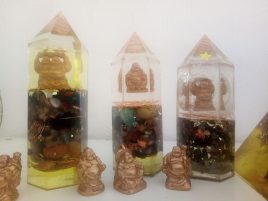
    Orgonite is a substance made from resin, metal shavings, and crystals, designed to transmute negative energy into positive energy. The concept comes from the work of Wilhelm Reich, who coined the term „orgone energy“ in the early 20th century. Reich believed that orgone was a type of life force energy present in all living things, and he created devices called orgone accumulators to harness and channel this energy.

    • How Orgonite is Believed to Work: Orgonite enthusiasts claim that this material transforms negative energy (like harmful EMFs or psychotronic frequencies) into positive energy. By placing orgonite near HAARP towers, psychotronic devices, or other sources of harmful frequencies, some believe that it can neutralize their effects.
    • Cloudbusters: Inspired by Reich’s cloudbuster device, modern orgonite practitioners have built orgonite cloudbusters to allegedly counteract harmful geoengineering, chemtrails, and weather manipulation said to be caused by HAARP.

    Orgonite is typically placed in homes, near computers, or worn as jewelry, in the belief that it offers protection from negative energies and electromagnetic fields. Though this practice is popular in certain metaphysical circles, the scientific community does not recognize orgonite or orgone energy.

    4. Radionics and Radionic Devices

    Radionics is a form of alternative medicine and metaphysical practice that involves using specific devices to interact with subtle energy fields. Practitioners of radionics believe that they can use these devices to influence a person’s health, consciousness, or environment through the tuning of frequencies or energies.

    • How Radionic Devices Work: Radionics devices are based on the idea that all living things emit subtle electromagnetic fields or vibrations, and these can be influenced or adjusted by the use of certain tools or machines. A radionic machine typically has dials, tuning mechanisms, and often uses crystals or sacred geometrical shapes to harness and direct energy.
    • Against HAARP and Psychotronic Devices: Some proponents believe radionic devices can be used to neutralize the harmful frequencies from HAARP and psychotronic devices by either sending out opposing frequencies or „shielding“ an individual or space. The radionic device is “tuned” to specific frequencies that are believed to resonate with healing or protective energies, thereby disrupting or canceling out the harmful effects.

    Though radionics has historical roots going back to the early 20th century, there is no scientific consensus on whether these devices have any real measurable effect. Radionics remains in the realm of metaphysical and pseudoscientific practices.

    5. Combining Crystals, Orgonite, and Radionics for Protection

    In certain spiritual and metaphysical communities, the combination of crystals, orgonite, and radionic devices is seen as a comprehensive defense system against harmful energy, EMFs, and psychotronic attacks:

    • Crystals are placed in the environment to absorb and neutralize negative energy.
    • Orgonite devices are used to transform harmful EMFs or psychotronic energy into beneficial energy.
    • Radionic devices are employed to „tune“ the surrounding energies to more protective frequencies.

    This triad of metaphysical tools is believed by some to provide strong protection against HAARP-generated energies or psychotronic devices, forming a personal or environmental energy field that resists external manipulation.

    6. Scientific Perspective

    It’s important to note that from a scientific viewpoint, there is no evidence to support the efficacy of crystals, orgonite, or radionics in protecting against HAARP or psychotronic devices. The effects of HAARP have been extensively studied and are considered by mainstream scientists to be limited to atmospheric research with no proven capability to control weather or minds.

    Psychotronic devices also remain speculative and are largely discussed in the context of conspiracy theories rather than verified technology.

    The use of crystals and orgonite for EMF protection or energy healing is similarly not supported by scientific research, and is instead classified under alternative medicine or metaphysical practices.

    The belief that crystals, orgonite, and radionic devices can counteract the harmful effects of HAARP antennas or psychotronic devices stems from metaphysical traditions, alternative science, and certain conspiracy theories. While there is no scientific backing for these claims, many people feel that these tools offer protection, healing, and energy balancing in the face of perceived electromagnetic or psychotronic dangers.

    If you are considering using these methods, it’s important to understand that they fall under alternative practices, which often involve personal belief systems rather than empirical validation.

  • Autumn Equinox and Rituals

    Autumn Equinox and Rituals

    The autumnal equinox, which occurs around September 22-23 in the Northern Hemisphere and around March 20-21 in the Southern Hemisphere, is a significant event both astronomically and culturally. It marks the moment when day and night are approximately equal in length, symbolizing a time of balance and transition. This equinox signals the end of summer and the beginning of autumn, and has been celebrated by various cultures throughout history with rituals and festivals that honor the harvest, balance, and preparation for the darker half of the year.

    Astronomical Significance

    The autumnal equinox occurs when the Earth’s equator passes directly through the center of the sun. This means that the sun rises directly in the east and sets directly in the west, and both day and night are nearly equal in duration. After the equinox, the nights grow longer than the days as the Earth tilts further away from the sun, leading toward winter in the Northern Hemisphere.

    Cultural and Spiritual Significance

    For many cultures, the autumnal equinox is a time to celebrate the harvest, give thanks for the abundance of nature, and prepare for the colder months ahead. It is a moment of reflection on the cyclical nature of life, the balance between light and dark, and the need for inner preparation as external conditions become more challenging.

    Rituals and Traditions Associated with the Autumnal Equinox

    1. Harvest Festivals

    • Many cultures celebrate the autumnal equinox with harvest festivals, giving thanks for the bounty of the Earth. These festivals often include communal feasts, where seasonal foods like grains, fruits, and vegetables are shared.
    • Mabon: In modern pagan traditions, especially those inspired by Wicca and neo-paganism, the equinox is celebrated as Mabon, the second harvest festival in the Wheel of the Year. Mabon is a time to give thanks for the harvest and to reflect on the balance between light and dark, as the days grow shorter. Rituals may include decorating altars with autumn leaves, acorns, and symbols of the harvest, such as apples, grapes, and wheat.
    • Thanksgiving: Though not directly aligned with the equinox, many cultures, including in the United States and Canada, have adopted harvest-themed celebrations like Thanksgiving, which also express gratitude for the Earth’s abundance.

    2. Balancing Rituals

    • Since the equinox is a time when day and night are in balance, many rituals focus on the concept of balance in life, both externally and internally.
    • Meditation and Reflection: Some people use this time for meditative practices, focusing on inner balance, letting go of excess, and preparing for the introspective nature of the winter months. The equinox is seen as an opportunity to assess areas of life that are out of balance and make adjustments.
    • Rituals of Release: In preparation for the coming darker season, people often engage in rituals of letting go. This might involve writing down worries or negative thoughts on paper and then burning them to symbolize releasing burdens and starting anew.

    3. Bonfires and Fire Ceremonies

    • Fire, a symbol of transformation and illumination, is often used in equinox rituals to honor the sun’s waning power and bring warmth and light as the nights grow longer.
    • Bonfires have been a traditional part of equinox celebrations, especially in agricultural societies. They serve as a communal gathering point and a way to give thanks for the sun’s light, even as its strength diminishes. Participants may offer sacrifices of harvested goods or symbolic objects into the fire as an act of gratitude.

    4. Honoring the Deities of the Harvest

    • In ancient cultures, the autumnal equinox was often associated with gods and goddesses connected to the harvest, fertility, and the cycle of life and death.
    • Demeter and Persephone: In Greek mythology, the equinox marks the beginning of Persephone’s descent into the underworld, where she will spend the winter months. Her mother, Demeter, the goddess of the harvest, mourns her absence, which causes the Earth to become barren until Persephone’s return in the spring.
    • Celtic Deities: In Celtic traditions, this time of year is connected with the Green Man or Cernunnos, who represent the dying aspect of nature as it prepares for rebirth. Rituals may involve honoring these deities with offerings of grains, fruits, and other symbols of the harvest.

    5. Creating an Autumn Altar

    • Many spiritual practitioners, especially within pagan and Wiccan traditions, create seasonal altars to honor the equinox. These altars may be decorated with symbols of autumn, including pumpkins, cornucopias, fallen leaves, acorns, gourds, and autumnal flowers.
    • Personal items or objects representing balance, such as scales or two equal candles (one representing light, one representing darkness), may also be placed on the altar to symbolize the equinox’s theme of equilibrium.

    6. Gratitude Practices

    • The equinox is a powerful time for gratitude rituals, expressing thanks for the harvest, both literal and metaphorical. People may write down what they are thankful for over the past year and offer these thoughts to the Earth, a fire, or a river as a symbolic gesture of appreciation.

    7. Nature Walks and Grounding Rituals

    • Connecting with nature during the equinox is a common practice. Many people take nature walks to observe the changing colors of the leaves, the crispness in the air, and the shifting light. These walks are often used as a time to reflect on the cycle of the seasons and one’s place within it.
    • Some traditions practice grounding rituals, where participants walk barefoot on the Earth to reconnect with nature’s energy and give thanks for the harvest season.

    8. Feasting and Sharing Seasonal Foods

    • Sharing a seasonal feast is central to many autumnal equinox celebrations. Foods typically associated with autumn, such as apples, pumpkins, squash, corn, and grains, are used in preparing meals that are shared with family, friends, and the community.
    • These feasts are not only a celebration of the harvest but also an opportunity to share the fruits of labor and express gratitude for the abundance of the Earth.

    9. Ancestor Honoring and Reflection on the Cycle of Life

    • The autumn equinox also serves as a time to reflect on the cycle of life and death, as the natural world begins its decline into winter. In some traditions, this is a time to honor the ancestors and the wisdom of those who have come before.
    • Rituals may include lighting candles for deceased loved ones, creating altars with photos or mementos of ancestors, or performing prayers or invocations to honor their memory and guidance.

    The autumnal equinox is a time of deep reflection, gratitude, and balance. It invites us to honor the Earth’s cycles, prepare for the coming winter, and assess the balance in our own lives. Whether through meditation, communal feasting, fire ceremonies, or quiet walks in nature, the rituals associated with the equinox emphasize the importance of harmony between light and dark, inner and outer worlds, and humanity’s relationship with the natural environment. These celebrations provide a meaningful way to connect with the changing seasons and with ancient traditions that honor the cyclical rhythms of life.

  • Meditația, mantrele și mudrele in terapia spirituala

    Meditația, mantrele și mudrele in terapia spirituala

    Meditația, mantrele și mudrele sunt practici străvechi, folosite de mii de ani pentru a promova vindecarea mentală, emoțională și spirituală. Acestea au origini în tradițiile spirituale orientale, în special în hinduism, budism și tradițiile yoghine. În terapia de vindecare, ele pot juca un rol important prin promovarea unui sentiment de echilibru interior și liniște.

    1. Meditația în terapia de vindecare

    Meditația este o practică de concentrare și conștientizare care ajută la reducerea stresului, la îmbunătățirea clarității mentale și la restabilirea echilibrului emoțional. Meditația poate fi de diferite tipuri, iar fiecare poate avea beneficii terapeutice distincte:

    • Meditația mindfulness: Concentrarea atenției asupra momentului prezent fără a judeca. Aceasta este utilă pentru reducerea anxietății, depresiei și a stresului cronic.
    • Meditația concentrată: Implică focusarea pe un singur obiect, sunet, respirație sau concept. Ajută la dezvoltarea clarității mentale și la eliminarea distragerilor.
    • Meditația de vizualizare: În această practică, indivizii își imaginează în mod activ scenarii de vindecare sau de pace interioară. De exemplu, cineva ar putea vizualiza lumina vindecătoare care curge prin corp.
    • Meditația transcedentală: Utilizează mantre pentru a transcende gândurile obișnuite și a atinge o stare de liniște profundă și relaxare.

    Beneficii terapeutice ale meditației:

    • Reducerea stresului și a cortizolului din organism.
    • Îmbunătățirea sănătății mentale, prin reducerea anxietății și depresiei.
    • Promovarea vindecării fizice, deoarece meditația reduce tensiunea arterială, îmbunătățește somnul și sprijină sistemul imunitar.
    • Restabilirea echilibrului emoțional, ajutând indivizii să gestioneze mai bine emoțiile negative.

    2. Mantrele în terapia de vindecare

    Mantrele sunt sunete, cuvinte sau fraze sacre repetate în timpul meditației pentru a ajuta la concentrarea minții și la conectarea cu energia divină sau cosmică. Cuvântul „mantra” provine din sanscrită și poate fi tradus aproximativ ca „instrument pentru minte” (de la „man” – minte și „tra” – instrument). Mantrele sunt folosite pentru a alinia vibrațiile corpului și minții și pentru a promova vindecarea și echilibrul.

    • Om: Una dintre cele mai cunoscute mantre, „Om” este considerată sunetul primordial al universului. Repetarea acestei mantre ajută la calmarea minții și la alinierea la energia cosmică.
    • Om Mani Padme Hum: O mantră budistă foarte cunoscută care este asociată cu compasiunea și iluminarea. Practicanții cred că repetarea acestei mantre aduce claritate spirituală și vindecare emoțională.
    • So Hum: O mantră care înseamnă „Eu sunt asta”, este folosită pentru a cultiva conștientizarea conexiunii între individ și univers.

    Beneficii terapeutice ale mantrelor:

    • Eliminarea stresului mental: Prin repetarea unei mantre, mintea devine concentrată și liniștită, reducând anxietatea și promovând calmul.
    • Creșterea energiei pozitive: Mantrele sunt asociate cu vibrații sonore care influențează câmpul energetic al corpului, promovând sentimente de pace și bunăstare.
    • Îmbunătățirea concentrării și clarității: Repetarea mantrelor poate ajuta la eliberarea gândurilor negative și la încurajarea unei perspective mai clare asupra vieții.

    3. Mudrele în terapia de vindecare

    Mudrele sunt gesturi simbolice ale mâinilor care sunt folosite în practici spirituale și terapeutice pentru a canaliza și direcționa energia pranică (forța vieții). Fiecare mudră influențează diferite părți ale corpului, ale minții și ale spiritului, ajutând la armonizarea energiilor din corp.

    • Gyan Mudra (Mudra cunoașterii): Este realizată prin unirea vârfului degetului mare cu vârful degetului arătător. Ajută la îmbunătățirea concentrării și la reducerea tensiunii mentale. Este asociată cu înțelepciunea și iluminarea.
    • Prana Mudra (Mudra energiei vitale): Această mudră este realizată prin unirea vârfului degetului mare cu vârful degetelor mic și inelar. Este folosită pentru a stimula energia vitală și pentru a îmbunătăți sănătatea generală.
    • Apana Mudra (Mudra detoxificării): Este realizată prin unirea vârfului degetului mare cu vârfurile degetelor mijlociu și inelar. Ajută la eliminarea toxinelor din organism și la purificarea energetică.
    • Shunya Mudra (Mudra vidului): Folosind această mudră, degetul mijlociu este pliat peste baza degetului mare, în timp ce degetul mare apasă ușor pe el. Ajută la eliminarea durerii, în special în urechi și gât.

    Beneficii terapeutice ale mudrelor:

    • Echilibrarea energiilor: Fiecare deget este asociat cu unul dintre cele cinci elemente (pământ, apă, foc, aer și eter), iar mudrele ajută la echilibrarea acestor elemente în corp.
    • Reducerea stresului și anxietății: Practicarea mudrelor poate calma mintea și reduce tensiunea emoțională.
    • Promovarea vindecării fizice: Mudrele sunt utilizate pentru a stimula anumite canale energetice din corp, sprijinind procesele de vindecare fizică.
    • Îmbunătățirea clarității mentale: Mudrele practicate în timpul meditației pot ajuta la creșterea concentrării și a conștientizării de sine.

    Utilizarea acestor practici în vindecare

    În cadrul terapiei de vindecare, meditația, mantrele și mudrele sunt folosite împreună pentru a crea un proces holistic de transformare. Practicile sunt menite să calmeze mintea, să realinieze energia corpului și să ofere o conexiune mai profundă cu sinele interior și cu energiile universale.

    Exemple de combinații pentru vindecare:

    • Meditație + mantra + mudră pentru calmare emoțională: Practica unei meditații mindfulness, repetând mantra „Om Shanti” (care înseamnă „pace”) și folosind Gyan Mudra pentru a ajuta la liniștirea minții și la echilibrarea emoțiilor.
    • Meditație + mantra pentru vindecare fizică: Repetarea mantrei „Om Namah Shivaya” în timpul unei meditații de vizualizare poate sprijini vindecarea fizică și transformarea, în timp ce utilizarea Prana Mudra poate ajuta la stimularea energiei vitale și a proceselor de vindecare.
    • Mudre pentru purificare energetică: Practicarea Apana Mudra poate fi utilizată în timpul unei meditații de curățare energetică pentru a ajuta la detoxifierea emoțională și fizică a corpului.

    Meditația, mantrele și mudrele oferă un cadru holistic pentru vindecare prin conectarea minții, corpului și spiritului. Fiecare dintre aceste practici ajută la echilibrarea energiilor interne, reducerea stresului și stimularea proceselor naturale de vindecare ale corpului. Incorporarea lor în viața de zi cu zi poate aduce o transformare profundă, susținând sănătatea fizică, emoțională și spirituală.

  • Prometheus and the fire

    Prometheus and the fire

    The myth of Prometheus and the fire is one of the most significant stories in Greek mythology, symbolizing defiance against authority, the pursuit of knowledge, and the cost of progress. Prometheus, a Titan, defied the gods, particularly Zeus, by stealing fire from the heavens and giving it to humanity. This myth has been interpreted in various ways throughout history, often highlighting themes of enlightenment, rebellion, and sacrifice.

    The Myth of Prometheus

    Prometheus, whose name means „forethought,“ was one of the Titans, an older generation of gods who ruled before the Olympians. However, unlike most Titans who were overthrown by Zeus and his siblings, Prometheus sided with the Olympian gods during their battle, gaining a unique position among them. Despite this, Prometheus had a special concern for humankind and became their protector, seeing their potential for greatness but also their vulnerability.

    The Gift of Fire

    In the myth, after Zeus established his rule, he became wary of the power of humanity. Zeus withheld fire from humans, believing that by keeping them in the dark (both literally and metaphorically), they would remain weak, dependent, and incapable of rivaling the gods.

    Prometheus, however, saw fire as an essential element for human progress. Fire symbolized knowledge, creativity, and technology. It represented the ability to cook food, forge tools, create art, and establish civilization. Without fire, humanity would remain in a primitive state, unable to advance or develop its potential.

    Defying Zeus’s decree, Prometheus stole fire from Mount Olympus and brought it to Earth, gifting it to humans. In some versions of the myth, Prometheus hides the fire in a hollow fennel stalk to smuggle it past the gods.

    The Wrath of Zeus

    Zeus was enraged by Prometheus’s act of defiance. Not only had Prometheus disobeyed him, but he had also empowered humanity in ways that Zeus had not intended. Zeus feared that humans, with fire in their hands, would eventually rival the gods themselves.

    To punish Prometheus, Zeus had him bound to a rock or mountain (in most versions, it is Mount Caucasus) where an eagle (a symbol of Zeus) would come each day to eat his liver. Since Prometheus was immortal, his liver would regenerate overnight, only for the eagle to return the next day and repeat the torment. This cycle of endless suffering was meant to last for eternity.

    The Liberation of Prometheus

    Despite this harsh punishment, Prometheus’s story does not end in perpetual torment. According to some versions of the myth, Heracles (Hercules) eventually comes to free Prometheus as part of his Twelve Labors. Heracles kills the eagle and releases Prometheus from his chains, allowing him to escape his punishment, although in some accounts, Prometheus had to wear a ring as a symbol of his former bondage.

    Symbolism and Interpretations

    The myth of Prometheus has been interpreted in many different ways throughout history, reflecting different cultural and philosophical views on rebellion, knowledge, and the consequences of challenging authority.

    1. The Symbol of Fire:
      • Fire in the myth represents knowledge, enlightenment, and progress. By giving fire to humans, Prometheus empowers them to develop technology, culture, and civilization. In this sense, Prometheus is often seen as a champion of human creativity and intellect.
      • Fire also symbolizes freedom—the ability for humans to shape their own destiny and control their environment, rather than being at the mercy of nature or the gods.
    2. Defiance and Rebellion:
      • Prometheus’s theft of fire is a bold act of defiance against the divine authority of Zeus. In this way, Prometheus represents the archetype of the rebel who stands up to tyranny or oppression in the name of progress or justice.
      • This defiance is also seen as a tragic choice. Prometheus’s rebellion comes with severe consequences—eternal punishment. The story can be viewed as a cautionary tale about the price of challenging authority, especially when it involves powerful forces like the gods.
    3. Suffering and Sacrifice:
      • Prometheus’s punishment highlights the theme of sacrifice for the greater good. He endures unimaginable suffering to ensure that humanity can progress and achieve its potential. His torment can be seen as the price paid for enlightenment and freedom.
      • Prometheus has often been compared to other sacrificial figures in mythology and religion, such as Jesus Christ, who also suffers for the benefit of humanity. Both figures symbolize the idea that progress or salvation often requires great personal sacrifice.
    4. Human Progress and the Danger of Knowledge:
      • The story can also be read as a reflection on the dangers of knowledge. Just as Prometheus’s gift of fire had both positive and negative consequences, the pursuit of knowledge and technology can lead to both incredible advancements and destructive outcomes.
      • In this sense, Prometheus’s myth anticipates modern concerns about the ethical limits of scientific discovery and technological progress.
    5. Prometheus as a Culture Hero:
      • In many interpretations, Prometheus is seen as a culture hero, a figure who brings the tools of civilization to humanity. Fire is just one example—Prometheus was also credited with teaching humans various arts, sciences, and crafts, such as architecture, medicine, and writing.
      • This casts Prometheus in the role of a benefactor, whose actions—despite being condemned by Zeus—are ultimately for the benefit of humanity.

    Prometheus in Modern Interpretations

    The myth of Prometheus has continued to inspire thinkers, writers, and artists throughout the centuries. In modern times, the story of Prometheus has been reinterpreted in various ways, particularly in light of human progress, scientific discovery, and rebellion against authority.

    1. Prometheus as a Symbol of Enlightenment:
      • In the context of the Age of Enlightenment, Prometheus was often seen as a symbol of intellectual progress and human reason. Just as Prometheus gave fire to humanity, Enlightenment thinkers believed that reason, science, and education could liberate people from ignorance and superstition.
    2. Mary Shelley’s Frankenstein (The Modern Prometheus):
      • Mary Shelley’s famous novel, Frankenstein, carries the subtitle “The Modern Prometheus.” In this story, Dr. Frankenstein, like Prometheus, pushes the boundaries of human knowledge by creating life. However, the novel explores the dangers of unchecked scientific ambition, much like Prometheus’s fire brought both empowerment and danger.
    3. Existential and Political Interpretations:
      • In existential philosophy, Prometheus represents the struggle of the individual against the oppressive forces of fate or divine authority. His rebellion is often seen as a metaphor for human freedom, even in the face of suffering or an uncaring universe.
      • Politically, Prometheus has been embraced as a symbol of revolutionary defiance. His challenge to Zeus’s tyranny mirrors the struggles of those who fight against oppressive regimes or systems of power.

    The myth of Prometheus and the fire is a timeless story about the complexities of rebellion, the pursuit of knowledge, and the costs of progress. It raises fundamental questions about the role of defiance in advancing humanity, the dangers of overreaching, and the sacrifices necessary for enlightenment. Prometheus remains one of mythology’s most enduring figures, representing both the hope and the dangers that come with challenging the status quo in the pursuit of something greater.