
Category: Coperta

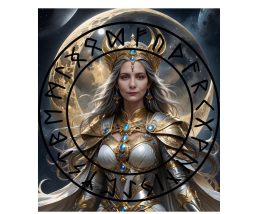
  • Runes & Runes magic and Moon Magic with runes

    Runes & Runes magic and Moon Magic with runes

    Runes and rune magic hold a significant place in the historical and spiritual traditions of the Germanic, Norse, and other Northern European cultures. The runes are more than just an ancient alphabet; they are symbols imbued with mystical meanings and powers. Rune magic, also known as “rune casting” or “rune divination,” involves using these symbols for various purposes, including divination, protection, and spellwork.

    The Origins of Runes

    The runes are an ancient alphabet used by the Germanic peoples, including the Norse and Anglo-Saxons, dating back to around the 2nd to 8th centuries AD. The most well-known runic alphabet is the Elder Futhark, which consists of 24 characters. The word “futhark” derives from the first six letters of the runic alphabet: F, U, Þ (Th), A, R, and K.

    Runes were used for various purposes, including writing, carving inscriptions, and performing rituals. The inscriptions have been found on stones, weapons, tools, and personal items, often in contexts that suggest both practical and magical uses.

    The Spiritual Significance of Runes

    Each rune in the Futhark has its own meaning, often linked to natural elements, deities, and fundamental aspects of life. For example:

    • Fehu (ᚠ): Symbolizes wealth, prosperity, and abundance.
    • Uruz (ᚢ): Represents strength, power, and health.
    • Thurisaz (ᚦ): Associated with giants, danger, and protection.
    • Ansuz (ᚨ): Linked to Odin, communication, and divine inspiration.
    • Raido (ᚱ): Symbolizes travel, movement, and the journey of life.

    These meanings can be interpreted in various ways, depending on the context in which they are used, making the runes a versatile tool for both divination and magical practices.

    Rune Magic

    Rune magic involves using runes in rituals, spells, and divination to harness their mystical powers. The practice is rooted in the belief that the runes are more than just symbols—they are powerful entities or forces that can influence the world around us.

    Rune Casting and Divination

    Rune casting, or “runecasting,” is a form of divination similar to tarot reading or I Ching. The practitioner asks a question or focuses on a particular situation, then draws one or more runes to interpret their meaning. The runes are usually drawn from a bag and can be cast in various patterns, with each position influencing the interpretation.

    For example, drawing the rune Ansuz might suggest the need for communication or guidance from higher powers, while Isa (ᛁ), which symbolizes ice and stagnation, might indicate obstacles or a period of inactivity.

    Rune Talismans and Amulets

    Runes have also been used to create talismans and amulets. A specific rune or combination of runes would be inscribed onto an object to bring about a desired effect, such as protection, healing, or success. The object could be worn, carried, or placed in a specific location to channel the rune’s energy.

    Bind Runes and Rune Scripts

    Bind runes are created by combining two or more runes into a single symbol to amplify their power or to create a new, specific effect. Rune scripts, on the other hand, are sequences of runes written out to form a magical statement or intention.

    For instance, a bind rune combining Algiz (ᛉ) for protection and Sowilo (ᛋ) for victory might be crafted to ensure success in a dangerous endeavor.

    The Mythological and Mystical Context

    Runes are deeply intertwined with Norse mythology and the worship of gods like Odin, who is said to have discovered the runes. According to the Hávamál, a poem in the Poetic Edda, Odin hung from the World Tree, Yggdrasil, for nine days and nights, sacrificing himself to gain the knowledge of the runes. This story highlights the profound spiritual significance of runes in Norse culture—they were not just learned but earned through sacrifice and profound experience.

    Modern Rune Practice

    Today, rune magic and divination continue to be practiced by those who follow Pagan, Heathen, or Neopagan spiritual paths, as well as by those interested in exploring ancient wisdom. Modern practitioners may use runes in a variety of ways, from daily meditation and guidance to more complex rituals and spellwork.

    The resurgence of interest in ancient traditions, including runes, reflects a broader desire to connect with nature, spirituality, and the wisdom of the past. Runes, with their deep historical roots and versatile applications, offer a unique and powerful tool for those seeking insight, guidance, and transformation.

    Moon magic combined with runes is a powerful practice that blends the ancient wisdom of runic symbols with the mystical energies of the moon. The moon has been revered for its influence on the earth, particularly in relation to tides, emotions, and cycles of growth and transformation. By incorporating runes into moon rituals, practitioners can harness both lunar energies and the symbolic power of the runes to manifest intentions, seek guidance, and perform magical workings.

    The Moon’s Phases and Their Magical Significance

    Each phase of the moon carries different energies that can be harnessed for specific types of magic:

    1. New Moon: A time for new beginnings, setting intentions, and planting the seeds of future projects. It’s a time for initiating change and invoking fresh energies.
    2. Waxing Crescent: The moon is growing, making this phase ideal for building momentum, attracting what you desire, and increasing abundance or personal power.
    3. First Quarter: A time of action and decision-making. This phase supports overcoming obstacles and taking definitive steps toward your goals.
    4. Waxing Gibbous: As the moon approaches fullness, this phase is for refining your plans, gathering strength, and ensuring your intentions are aligned with your true desires.
    5. Full Moon: The full moon is the peak of lunar power, making it the best time for manifesting, bringing goals to fruition, and performing powerful rituals. It is also a time for divination and seeking clarity.
    6. Waning Gibbous: As the moon begins to wane, this phase is for gratitude, reflection, and releasing what no longer serves you.
    7. Last Quarter: A time for letting go, banishing negative influences, and cleansing. It’s a period of internal work and resolving conflicts.
    8. Waning Crescent: The final phase before the new moon is a time for rest, introspection, and preparing for the next cycle.

    Incorporating Runes into Moon Magic

    Using runes in moon magic involves selecting runes that correspond to your intentions and the lunar phase. Here’s how to incorporate them:

    1. New Moon Rune Rituals

    • Runes: Fehu (ᚠ) for prosperity, Berkana (ᛒ) for new beginnings, Sowilo (ᛋ) for success.
    • Ritual: During the new moon, carve or draw these runes on a candle or piece of paper. As you focus on your intentions, light the candle or hold the paper, visualizing your goals coming to life. The runes will help channel the new moon’s energy into your desires.

    2. Full Moon Rune Magic

    • Runes: Algiz (ᛉ) for protection, Tiwaz (ᛏ) for victory, Ansuz (ᚨ) for divine guidance.
    • Ritual: Under the light of the full moon, create a circle of protection by drawing Algiz around your ritual space. Place the rune Tiwaz on your altar or hold it while you focus on your intention for victory or success. Meditate on the rune Ansuz to open yourself to divine messages or insights.

    3. Waning Moon Banishing Rituals

    • Runes: Hagalaz (ᚺ) for disruption and breaking down obstacles, Isa (ᛁ) for stillness and halting negative energy, Thurisaz (ᚦ) for protection and defense.
    • Ritual: During the waning moon, write down what you wish to banish or release. Carve or draw the runes Hagalaz and Thurisaz on a candle or object symbolizing the issue. As the candle burns or the object is discarded, visualize the runes breaking down the negative energies and the moon taking them away.

    4. Moon Water and Runes

    • Runes: Laguz (ᛚ) for flow and intuition, Mannaz (ᛗ) for self-awareness, Ehwaz (ᛖ) for movement and progress.
    • Ritual: Create moon water by placing a bowl of water under the full moon. You can inscribe or place the chosen runes next to the bowl to charge the water with their energies. Use the moon water for cleansing, anointing tools, or as a base for other rituals, knowing it carries both the lunar and runic energies.

    Personalized Rune Scripts for Moon Magic

    You can also create personalized rune scripts by combining several runes to match your specific intention during a moon phase. For example:

    • For love during the waxing moon: Gebo (ᚷ) for partnership + Wunjo (ᚹ) for joy.
    • For protection during the full moon: Algiz (ᛉ) for protection + Eiwaz (ᛇ) for stability.
    • For release during the waning moon: Hagalaz (ᚺ) for breaking old patterns + Perthro (ᛈ) for transformation.

    Moon magic and runes together create a potent system for harnessing the energies of both celestial and ancient symbolic powers. By aligning your rituals with the phases of the moon and the corresponding runes, you can amplify your intentions, enhance your spiritual practices, and connect deeply with the cycles of nature and the universe. This combination of lunar wisdom and runic magic allows for a personalized and powerful approach to manifestation, protection, and spiritual growth.
  • About Jainism

    About Jainism

    Jainism is an ancient religion that originated in India around the 6th century BCE. It is one of the world’s oldest religions, with a strong emphasis on non-violence, asceticism, and respect for all living beings. Jainism is not just a religious practice but also a way of life, guiding its followers towards spiritual liberation through a path of ethical living and self-discipline.

    Core Beliefs and Teachings

    1. Ahimsa (Non-Violence):
    The principle of ahimsa, or non-violence, is central to Jainism. It extends to all forms of life, including humans, animals, plants, and even microorganisms. Jainism teaches that every living being has a soul (jiva) and that all souls are equal. As a result, Jains practice strict vegetarianism and avoid activities that could harm any form of life. This principle is so deeply ingrained that some Jain monks and nuns wear masks to avoid accidentally inhaling and killing small insects.

    2. Anekantavada (Non-Absolutism):
    Anekantavada refers to the belief in the multiplicity of perspectives or non-absolutism. This doctrine suggests that no single viewpoint can represent the whole truth. Jainism teaches that truth and reality are complex and that different perspectives can offer partial views of the same truth. This concept encourages tolerance, open-mindedness, and respect for differing opinions.

    3. Aparigraha (Non-Possessiveness):
    Aparigraha is the principle of non-possessiveness or non-attachment. Jains believe that attachment to material possessions, desires, and emotions leads to suffering and hinders spiritual progress. By practicing detachment and minimizing their needs, Jains aim to reduce their karmic burden and move closer to liberation.

    4. Karma and Reincarnation:
    Jainism shares with other Indian religions the belief in karma and reincarnation. However, in Jainism, karma is a physical substance that adheres to the soul due to one’s actions, thoughts, and words. The accumulation of karma affects future lives, and the goal of Jain practice is to purify the soul by eliminating karmic particles through ethical living, meditation, and ascetic practices. The ultimate aim is to achieve moksha, or liberation, freeing the soul from the cycle of birth and death.

    Sects and Practices

    Jainism is divided into two major sects: Digambara and Shvetambara.

    • Digambara (meaning “sky-clad”) monks renounce all material possessions, including clothing, symbolizing their complete detachment from worldly life. They believe that women must be reborn as men to achieve liberation.
    • Shvetambara (meaning “white-clad”) monks and nuns wear simple white clothing. This sect is more liberal in its interpretation of Jain teachings and believes that women can also attain liberation.

    Despite these differences, both sects share the same core beliefs and ethical principles.

    Lifestyle and Ethics

    Jains lead a life of discipline and simplicity, following five main ethical vows:

    1. Ahimsa (Non-Violence): Avoiding harm to any living being.
    2. Satya (Truthfulness): Speaking the truth and avoiding falsehood.
    3. Asteya (Non-Stealing): Not taking anything that is not willingly given.
    4. Brahmacharya (Chastity): Practicing celibacy or, for laypersons, being faithful to one’s spouse.
    5. Aparigraha (Non-Possessiveness): Minimizing material possessions and desires.

    Jains often engage in regular fasting, meditation, and prayer as part of their spiritual practice. Festivals like Paryushana and Mahavir Jayanti are significant in the Jain calendar, emphasizing introspection, repentance, and the teachings of Lord Mahavira, the 24th and last Tirthankara.

    Influence and Legacy

    Jainism, though small in terms of the number of adherents (around 4-5 million worldwide), has had a profound influence on Indian culture, philosophy, and ethics. The Jain commitment to non-violence has inspired figures like Mahatma Gandhi, who applied these principles in his nonviolent struggle for Indian independence.

    In the modern world, Jainism’s emphasis on environmentalism, sustainability, and ethical living resonates with global movements advocating for ecological balance and ethical consumption. Jain temples and communities, particularly in India, continue to thrive, preserving their rich traditions and contributing to society through charitable works and education.

    Conclusion

    Jainism is a religion that emphasizes the sanctity of life, the importance of non-violence, and the pursuit of spiritual purity. Its teachings on non-attachment, ethical living, and respect for all beings offer a profound and timeless philosophy that continues to inspire and guide its followers towards a life of compassion, simplicity, and spiritual liberation.

  • Confucianism vs. Buddhism: A Comparative Analysis

    Confucianism vs. Buddhism: A Comparative Analysis

    Confucianism and Buddhism are two of the most influential philosophical and religious systems in East Asia, each with a profound impact on the cultures, societies, and spiritual lives of the people in the region. Despite their different origins and focus, both systems have coexisted and even complemented each other in various ways throughout history. This essay will explore the key differences and similarities between Confucianism and Buddhism, examining their core teachings, ethical principles, and influence on society.

    Origins and Foundational Beliefs

    1. Origins and Historical Context

    Confucianism originated in China during the 6th century BCE, founded by Confucius (Kong Fuzi), a philosopher and educator who sought to restore social harmony and moral values during a period of political turmoil. Confucianism is not a religion in the traditional sense but rather a system of ethical and philosophical teachings that emphasize human relationships, social order, and moral integrity.

    Buddhism, on the other hand, was founded by Siddhartha Gautama, known as the Buddha, in the 5th century BCE in India. Buddhism is a spiritual and religious tradition that focuses on the path to enlightenment and the cessation of suffering (dukkha). The teachings of Buddhism revolve around the Four Noble Truths and the Eightfold Path, which guide practitioners in overcoming desire and ignorance to achieve Nirvana, a state of liberation from the cycle of rebirth.

    2. Fundamental Teachings

    Confucianism is centered on the concept of ren (humaneness or benevolence), which represents the ideal relationship between individuals and the foundation of a harmonious society. Confucianism emphasizes the importance of li (ritual propriety) in maintaining social order and xiao (filial piety) as a key virtue, promoting respect and obedience to one’s parents and elders. The focus is on the cultivation of virtue, the development of moral character, and the fulfillment of one’s roles and duties within the family and society.

    Buddhism, by contrast, focuses on the inner journey of the individual toward enlightenment. The core teachings include the Four Noble Truths: the truth of suffering, the cause of suffering, the cessation of suffering, and the path leading to the cessation of suffering. The Eightfold Path, which includes right understanding, right intention, right speech, right action, right livelihood, right effort, right mindfulness, and right concentration, provides a framework for ethical living and mental discipline. Buddhism also emphasizes concepts such as impermanence (anicca), non-self (anatta), and the interdependent nature of all things.

    Ethics and Social Order

    1. Social Hierarchy and Relationships

    Confucianism places great emphasis on social harmony and the proper functioning of society through the fulfillment of roles and responsibilities. The Five Relationships (ruler-subject, father-son, husband-wife, elder brother-younger brother, and friend-friend) are central to Confucian ethics. These relationships are hierarchical, and each person has specific duties and obligations within them. The goal is to create a stable and orderly society where everyone knows their place and acts according to their role.

    Buddhism, while not focused on social hierarchy, teaches ethical conduct as a means to reduce suffering and advance on the path to enlightenment. The Five Precepts in Buddhism—abstaining from killing, stealing, sexual misconduct, false speech, and intoxicants—serve as moral guidelines for living a virtuous life. Buddhism encourages compassion, kindness, and equanimity toward all beings, regardless of social status. The emphasis is on personal responsibility for one’s actions (karma) and the cultivation of wisdom and mindfulness.

    2. Approach to Governance and Society

    Confucianism has historically been associated with governance and statecraft in East Asia. Confucius believed that a ruler should govern by moral example rather than by force, embodying the virtues of benevolence, righteousness, and wisdom. The idea of the Mandate of Heaven—the divine right to rule based on virtue—was deeply influenced by Confucian thought. Confucianism promotes a meritocratic system where officials are chosen based on their moral and intellectual qualities, as seen in the civil service exams of imperial China.

    Buddhism, while less directly involved in governance, has had a significant influence on the cultural and spiritual life of societies. Buddhist monasteries and monks often played roles in education, social welfare, and mediation. Buddhism’s emphasis on detachment from worldly desires and material wealth contrasts with the Confucian focus on social and familial obligations. However, Buddhist teachings on compassion and non-violence have also influenced rulers and governance, encouraging policies of tolerance and benevolence.

    Influence and Integration

    1. Confucianism in East Asia

    Confucianism has been the dominant philosophical system in China, Korea, Japan, and Vietnam for centuries, deeply influencing the cultural, social, and political fabric of these societies. Confucian ideals of respect for authority, the importance of education, and the value of family life continue to shape the social norms and practices in these countries. Confucianism has also been integrated with other philosophies, such as Daoism and Legalism, creating a rich and complex intellectual tradition.

    2. Buddhism’s Spread and Adaptation

    Buddhism spread from India to various parts of Asia, including China, Japan, Korea, Southeast Asia, and Tibet, adapting to the cultural contexts of each region. In China, Buddhism interacted with Confucianism and Daoism, leading to the development of unique schools such as Chan (Zen in Japan). In Japan, Buddhism became intertwined with Shinto practices, while in Tibet, it merged with indigenous Bon traditions. Despite its foreign origins, Buddhism became an integral part of the cultural and spiritual life in East Asia, coexisting with and sometimes complementing Confucianism.

    Confucianism and Buddhism, though originating from different cultural and philosophical traditions, have both profoundly shaped the societies of East Asia. Confucianism, with its emphasis on social harmony, duty, and moral governance, has provided a framework for social order and governance. Buddhism, with its focus on personal enlightenment and the alleviation of suffering, has offered a path for spiritual development and ethical living. While Confucianism is more concerned with external social structures and relationships, Buddhism focuses on the internal transformation of the individual. Together, these two systems have contributed to the rich cultural and intellectual heritage of the region, influencing not only the lives of individuals but also the broader societal structures in which they live.

  • Buddhism, Hinduism, and Usui Reiki

    Buddhism, Hinduism, and Usui Reiki

    Buddhism, Hinduism, and Reiki Usui, although distinct in their origins and practices, share a deep connection through their focus on energy, healing, and spiritual growth. These three traditions emphasize the importance of cultivating inner peace, aligning with universal energy, and fostering compassion. By exploring the parallels between these spiritual paths, we can gain a deeper understanding of their shared principles and the unique ways they contribute to the quest for personal and collective enlightenment.

    The Concept of Universal Energy

    One of the most significant parallels between Buddhism, Hinduism, and Reiki Usui is the concept of universal energy, which forms the foundation of these spiritual traditions.

    1. Hinduism: Prana as Life Force
    In Hinduism, the concept of prana is central. Prana, meaning “life force” or “vital energy,” is believed to flow through all living beings and the universe itself. This energy is carried by the breath and is responsible for life and vitality. Hindu practices such as yoga and pranayama (breath control) focus on balancing and enhancing the flow of prana to promote physical, mental, and spiritual well-being. The chakras, or energy centers within the body, are also fundamental to Hinduism, serving as focal points where prana is concentrated and distributed throughout the body.

    2. Buddhism: The Flow of Energy and Mindfulness
    While Buddhism does not explicitly use the term “prana,” it shares a similar understanding of the importance of energy flow within the body and mind. In Buddhism, the practice of mindfulness and meditation is crucial for cultivating samadhi (concentration) and vipassana (insight). These practices help practitioners align with the flow of energy in the body, leading to the development of samatha (tranquility) and panna (wisdom). Buddhist teachings also highlight the importance of balancing the mind’s energies through ethical living, meditation, and wisdom, which ultimately leads to enlightenment or Nirvana.

    3. Reiki Usui: Universal Life Energy
    Reiki, particularly the Usui system, is founded on the belief in a universal life force energy known as ki (in Japanese, similar to prana in Hinduism and qi in Chinese philosophy). Reiki practitioners channel this energy through their hands to promote healing and balance within the body. The practice of Reiki involves attunement, where the practitioner is connected to the universal energy, allowing them to serve as a conduit for healing. The goal of Reiki is to remove blockages in the flow of energy, restore harmony, and support the body’s natural ability to heal itself.

    Healing and Compassion

    Another key parallel between these traditions is their emphasis on healing and compassion as central to spiritual practice.

    1. Hinduism: Healing Through Devotion and Ritual
    In Hinduism, healing is closely tied to devotion (bhakti) and ritual practices. Hindus believe that connecting with the divine through prayer, mantra chanting, and rituals can bring about physical, emotional, and spiritual healing. The act of devotion, especially in forms like seva (selfless service), is seen as a way to purify the heart and mind, promoting healing on all levels. Compassion, or karuna, is also a vital virtue in Hinduism, guiding individuals to act with kindness and empathy toward others, which in turn fosters spiritual growth.

    2. Buddhism: The Path of Compassionate Healing
    Buddhism places great emphasis on compassion (also karuna) as one of the essential qualities of an enlightened being. The Bodhisattva ideal in Mahayana Buddhism embodies the ultimate expression of compassion, where a practitioner vows to attain enlightenment not just for their own liberation but for the benefit of all sentient beings. Healing in Buddhism is often associated with the practice of loving-kindness (metta) and compassion meditation, where practitioners focus on generating and sending out positive, healing energy to themselves and others. This practice is believed to alleviate suffering and promote spiritual well-being.

    3. Reiki Usui: Healing Through Compassionate Touch
    Reiki is inherently a practice of compassionate healing. The very act of channeling universal life energy to heal oneself and others reflects a deep commitment to compassion. In Reiki, the practitioner’s intent is crucial; a healing session is most effective when conducted with a loving, compassionate heart. Reiki principles, such as “Just for today, I will be kind to all living things,” echo the teachings of both Buddhism and Hinduism in their focus on compassion as a path to spiritual growth and healing.

    Spiritual Growth and Enlightenment

    The ultimate goal of Buddhism, Hinduism, and Reiki Usui is spiritual growth, leading to enlightenment, liberation, or a higher state of consciousness.

    1. Hinduism: Moksha and Liberation
    In Hinduism, the ultimate spiritual goal is moksha, or liberation from the cycle of birth, death, and rebirth (samsara). Moksha is achieved through self-realization and the dissolution of the ego, aligning oneself with the divine essence (atman), which is identical to the universal soul (Brahman). This process involves spiritual practices like meditation, yoga, and devotion, which purify the mind and lead to the realization of the oneness of all existence.

    2. Buddhism: Nirvana and the Cessation of Suffering
    Buddhism teaches that the ultimate goal is the attainment of Nirvana, a state of perfect peace and freedom from suffering. Nirvana is reached by following the Noble Eightfold Path, which includes right understanding, right intention, right speech, right action, right livelihood, right effort, right mindfulness, and right concentration. This path leads to the cessation of desire, the end of suffering, and the realization of the true nature of reality. In Buddhism, the dissolution of the ego and the cultivation of wisdom and compassion are essential for achieving enlightenment.

    3. Reiki Usui: Spiritual Growth Through Energy Alignment
    While Reiki is often viewed primarily as a healing modality, it also offers a path to spiritual growth and enlightenment. The practice of Reiki encourages self-reflection, mindfulness, and a deep connection with universal life energy. Through regular practice, Reiki practitioners aim to align their energy with the universal flow, leading to greater awareness, inner peace, and spiritual awakening. Reiki also teaches the importance of living in harmony with the principles of compassion, gratitude, and humility, which are vital for spiritual evolution.

    Integration and Synthesis

    Although Buddhism, Hinduism, and Reiki Usui have different origins and practices, they converge in their understanding of the importance of universal energy, healing, compassion, and spiritual growth. Each tradition offers unique insights and methods for connecting with the divine, healing oneself and others, and progressing on the path to enlightenment.

    1. Shared Practices and Teachings:
    The practices of meditation, mindfulness, and energy alignment are common threads that weave through all three traditions. Whether it’s through Hindu yoga, Buddhist meditation, or Reiki healing sessions, the focus is on achieving inner balance, clearing energy blockages, and aligning with the universal flow.

    2. Compassion as a Universal Principle:
    Compassion, a core tenet in Buddhism, Hinduism, and Reiki, serves as a universal principle guiding practitioners toward selflessness, healing, and spiritual growth. This shared emphasis on compassion highlights the interconnectedness of all beings and the importance of acting with kindness and empathy.

    3. Spiritual Evolution and Enlightenment:
    The ultimate goal of spiritual evolution—whether it is termed moksha, Nirvana, or spiritual awakening in Reiki—reflects the shared aspiration to transcend the ego, realize the true nature of reality, and achieve a state of oneness with the universe. This journey requires discipline, dedication, and a deep commitment to inner transformation.

    Conclusion

    Buddhism, Hinduism, and Reiki Usui, though distinct in their practices and cultural contexts, are deeply interconnected in their spiritual philosophies. They each emphasize the flow of universal energy, the importance of healing and compassion, and the pursuit of spiritual growth and enlightenment. By exploring these parallels, we can gain a deeper appreciation of the universal principles that guide these traditions and how they can be integrated into our lives to foster inner peace, healing, and spiritual fulfillment.


  • The Power of Fear

    The Power of Fear

    The Destructive Power of Fear: Breaking the Soul, Stifling Desire, and Inviting Illness

    Fear is a powerful and pervasive emotion that can have profound effects on every aspect of our lives. It is an intrinsic part of the human experience, designed to protect us from harm by triggering our fight-or-flight response in the face of danger. However, when fear becomes overwhelming or chronic, it can have the opposite effect, breaking our souls, preventing us from pursuing our desires, and even making us physically ill. Understanding how fear operates and learning to overcome it is essential for living a fulfilling and healthy life.


    The Destructive Power of Fear: Breaking the Soul, Stifling Desire, and Inviting Illness

    Fear is a powerful and pervasive emotion that can have profound effects on every aspect of our lives. It is an intrinsic part of the human experience, designed to protect us from harm by triggering our fight-or-flight response in the face of danger. However, when fear becomes overwhelming or chronic, it can have the opposite effect, breaking our souls, preventing us from pursuing our desires, and even making us physically ill. Understanding how fear operates and learning to overcome it is essential for living a fulfilling and healthy life.

    Fear and the Soul

    The soul, often considered the essence of our being, is where our deepest desires, passions, and sense of purpose reside. It is through the soul that we connect with our higher selves, find meaning in life, and experience true joy. However, when fear takes root in our consciousness, it can suffocate the soul, stifling our inner light and disconnecting us from our true selves.

    1. Fear as a Soul Crusher: Fear can break the soul by eroding our sense of self-worth and identity. When we live in fear—whether of failure, rejection, or the unknown—we begin to doubt our abilities, our value, and our potential. This doubt weakens the soul, leading to a loss of confidence and a diminished sense of purpose. Over time, the soul becomes fragmented, as we suppress our true desires and conform to the expectations or limitations imposed by our fears.

    2. Disconnecting from Passion: Fear can also cause us to abandon our passions and dreams. The soul thrives on the pursuit of what we love, but fear creates barriers that prevent us from following our heart. Whether it’s the fear of judgment, fear of change, or fear of not being good enough, these mental blocks keep us stuck in a life that feels unfulfilled and stagnant. As a result, the soul becomes restless and discontented, yearning for the expression and freedom that fear denies it.

    Fear as a Barrier to Action

    One of the most destructive aspects of fear is its ability to paralyze us, preventing us from taking action and achieving our goals. Fear can manifest in many forms—fear of failure, fear of success, fear of the unknown—and each can be equally debilitating. When fear takes control, it robs us of the courage and motivation needed to pursue our ambitions and live life to its fullest.

    1. The Fear of Failure: The fear of failure is one of the most common and powerful fears. It can stop us from even attempting to pursue our goals, as the prospect of not succeeding becomes more daunting than the desire to try. This fear often stems from a perfectionist mindset, where anything less than success is seen as a personal shortcoming. Consequently, we choose inaction over the possibility of failure, which ultimately leads to missed opportunities and unfulfilled potential.

    2. The Fear of Success: Paradoxically, the fear of success can be just as paralyzing as the fear of failure. Success often brings with it increased responsibilities, higher expectations, and the pressure to maintain a certain standard. For some, the prospect of these changes can be overwhelming, leading them to sabotage their own efforts to succeed. This fear keeps us trapped in mediocrity, afraid to step into the full potential of who we could be.

    3. The Fear of the Unknown: The unknown is inherently frightening because it is unpredictable and beyond our control. Fear of the unknown can prevent us from taking risks, trying new things, or making changes in our lives. We cling to the familiar, even if it is unsatisfying, because the alternative—venturing into the unknown—feels too risky. This fear keeps us in a state of inertia, preventing personal growth and the exploration of new possibilities.

    The Physical Manifestations of Fear

    Beyond its impact on the soul and our ability to take action, fear can also have serious physical consequences. Chronic fear triggers a constant state of stress, which over time can lead to a range of health problems. The mind and body are deeply interconnected, and when fear dominates our thoughts, it can manifest as physical illness.

    1. Stress and Anxiety: When we live in a state of fear, our bodies respond by releasing stress hormones like cortisol and adrenaline. While these hormones are helpful in short bursts, chronic exposure can lead to anxiety, insomnia, and other stress-related conditions. Over time, this constant state of heightened alertness can wear down the body’s systems, leading to burnout and fatigue.

    2. Immune System Suppression: Chronic fear and stress weaken the immune system, making us more susceptible to illness. The body’s natural defense mechanisms are compromised, leading to increased vulnerability to infections, diseases, and other health issues. The more we live in fear, the more our bodies become a breeding ground for illness, as the immune system struggles to keep up with the constant state of tension.

    3. Psychosomatic Illnesses: Fear can also manifest as psychosomatic illnesses—physical symptoms that arise from psychological distress. Common examples include headaches, stomach issues, and chronic pain, all of which can be triggered or exacerbated by fear and anxiety. These symptoms are the body’s way of expressing the unresolved fears that weigh on the mind, and they often persist until the underlying emotional issues are addressed.

    Overcoming Fear and Reclaiming Power

    While fear can be incredibly destructive, it is not insurmountable. By confronting our fears and learning to manage them, we can reclaim our power, heal our souls, and restore our health. This process requires self-awareness, courage, and a commitment to personal growth.

    1. Acknowledging and Understanding Fear: The first step in overcoming fear is to acknowledge its presence and understand its root causes. This involves introspection and honest self-examination, asking ourselves what we are truly afraid of and why. Understanding the underlying beliefs and experiences that fuel our fears can help us to address them more effectively.

    2. Challenging Fearful Thoughts: Fear often thrives on irrational or exaggerated thoughts. By challenging these thoughts and questioning their validity, we can begin to dismantle the power that fear holds over us. Cognitive-behavioral techniques, such as reframing negative thoughts and focusing on positive outcomes, can be particularly effective in this process.

    3. Taking Action Despite Fear: Courage is not the absence of fear but the ability to take action in spite of it. By pushing ourselves to move forward, even when fear is present, we can gradually build confidence and resilience. Each small step taken in the face of fear weakens its hold, allowing us to regain control over our lives.

    4. Practicing Mindfulness and Relaxation: Mindfulness practices, such as meditation and deep breathing, can help to calm the mind and reduce the physical symptoms of fear. By staying present and focused, we can prevent fear from spiraling out of control and keep it in perspective. These practices also promote relaxation and stress relief, supporting overall mental and physical health.

    5. Seeking Support: Overcoming fear is often easier with the support of others. Whether through therapy, support groups, or trusted friends and family, sharing our fears and receiving encouragement can provide the strength needed to face them. Professional help may also be necessary for those dealing with deep-seated fears or trauma.

    Conclusion

    Fear, when left unchecked, can break our souls, prevent us from achieving our dreams, and even make us physically ill. It is a powerful force that can dominate our lives, leading to a sense of helplessness and despair. However, by acknowledging, understanding, and confronting our fears, we can reclaim our power and live a more fulfilling and healthy life. Through self-awareness, courage, and support, we can overcome the destructive influence of fear, heal our souls, and pursue our true desires with confidence and resilience.